Pool Coping and Deck Materials for GTA Backyards
The water gets all the attention, but the surface around it is what people actually stand on, sit on, and look at for the other twenty hours of the day. Pool coping and the deck beyond it decide whether a backyard feels finished or unfinished, and in Ontario they also decide how well the whole installation survives thirty freeze-thaw cycles a year. This guide compares every realistic material for a GTA pool surround with 2026 installed costs, honest durability notes, and pool deck ideas that suit our climate rather than a Florida catalogue.
Ryan Roy
Lead Pool Specialist, Swimpool 360
- Written for the Toronto & GTA Market
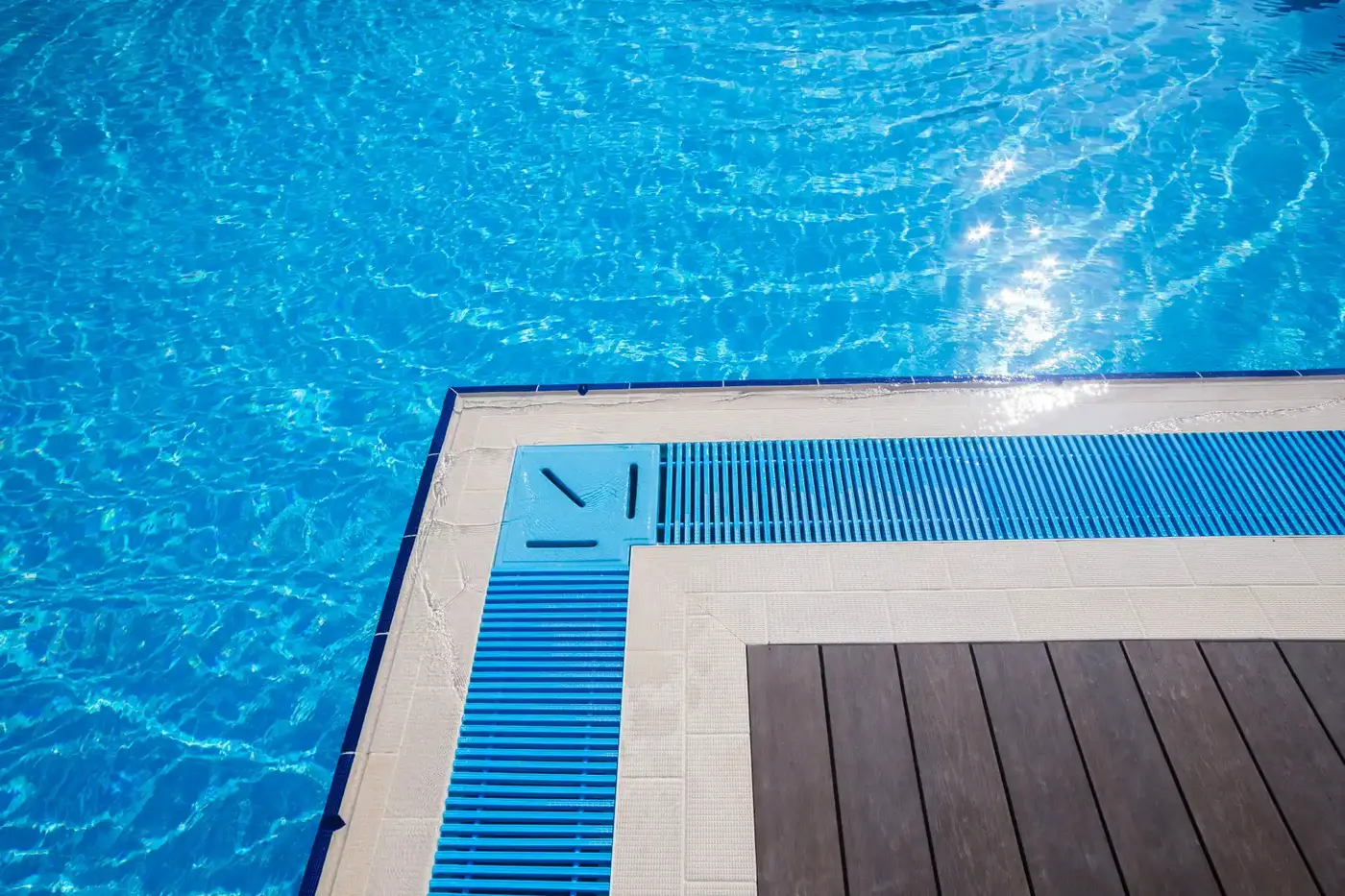
What Pool Coping Actually Does
Pool coping is the capping material that finishes the top edge of the pool wall and bridges the gap between the shell and the deck. It is easy to think of it as trim. It is not. Coping does three structural jobs and one comfort job, and getting it wrong causes problems that are expensive to reach later.
- It caps and protects the pool structure. The top of the wall is the most vulnerable point of any pool. Coping seals it.
- It manages splash-out. Correctly installed coping sheds water away from the pool, not back into it, which keeps deck water and its dirt out of your filtration system.
- It holds the liner track. In vinyl liner pools, which is most of Ontario, the coping carries the receiver that holds the liner bead. That makes coping and liner replacement related jobs.
- It is the surface everyone touches. Hands grip it, elbows rest on it, feet push off it. Rough or hot coping is a daily irritation.
The joint between coping and deck deserves special attention in our climate. It must be a flexible expansion joint, not a rigid mortar fill. Concrete and stone move at different rates through a freeze-thaw cycle, and a rigid joint will crack in the first or second winter, letting water track down behind the pool wall where it does real damage.
Coping Types and 2026 Costs
Coping is priced by the linear foot. A typical 16 by 32 foot rectangular pool has roughly 96 linear feet of edge, so multiply accordingly.
| Coping Type | Cost per Linear Foot | Notes |
|---|---|---|
| Aluminum or polymer track | $25 to $45 | Standard on many vinyl pools, functional rather than decorative |
| Precast concrete | $45 to $70 | Consistent, affordable, wide colour range |
| Poured concrete (cantilever) | $50 to $80 | Seamless modern look, difficult to repair if damaged |
| Natural flagstone | $70 to $110 | Characterful, varied thickness, needs a skilled installer |
| Travertine | $75 to $120 | Stays cool underfoot, must be a dense grade for Ontario |
| Granite or limestone | $85 to $120 | Extremely durable, premium appearance and price |
One comfort note that matters more than people expect: dark coping in full Ontario sun gets genuinely too hot to walk on by mid-afternoon in July. Light greys, buffs, and sand tones stay usable. If you love a dark stone, use it on the deck perimeter and keep the coping itself light.
Deck Materials Compared
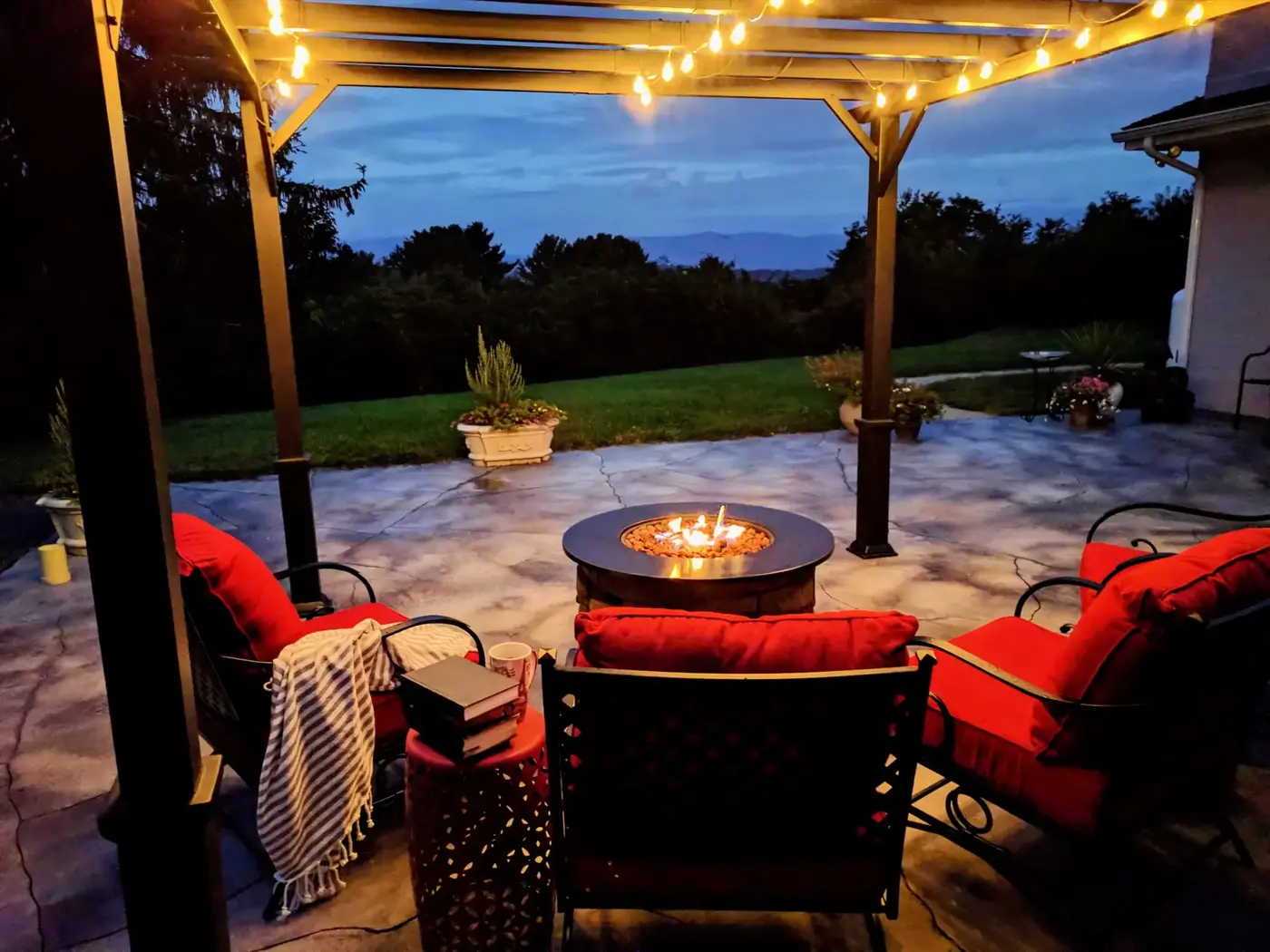
Here is the full comparison for GTA installs in 2026. Costs are installed, including base preparation, and assume reasonable site access.
| Material | Cost per sq ft | Lifespan | Freeze-Thaw |
|---|---|---|---|
| Broom-finish concrete | $18 to $28 | 20 to 30 yrs | Good with proper joints |
| Stamped concrete | $24 to $38 | 20 to 25 yrs | Good, needs resealing |
| Interlocking pavers | $25 to $40 | 30 to 50 yrs | Excellent |
| Composite decking | $30 to $50 | 25 to 30 yrs | Excellent |
| Pressure-treated wood | $18 to $30 | 10 to 15 yrs | Fair, needs annual care |
| Natural stone | $35 to $60 | 40 to 60 yrs | Excellent if low absorption |
The honest short version
- Tightest budget: broom-finish concrete. It is plain but it works, and money saved here can go into landscaping that softens it.
- Best all-round value in Ontario: interlocking pavers. Highest durability in freeze-thaw, repairable, huge design range, and strong resale appeal.
- Best barefoot comfort: travertine or a light-toned natural stone. Noticeably cooler than concrete on a hot afternoon.
- Best for a raised or sloped yard: composite decking. It spans grade changes that would need expensive retaining work under a paver deck.
- Avoid: smooth-troweled or polished finishes anywhere near water. They are dangerously slippery wet.
What Actually Survives an Ontario Winter
Southern Ontario runs roughly thirty to forty freeze-thaw cycles a year. Water enters any porous material or joint, freezes, expands about nine percent, and pushes. Repeat that forty times a season for a decade and you learn quickly which materials were chosen properly.
Why interlocking wins here
An interlocking pool deck is not a single rigid surface. It is hundreds of individual units resting on a compacted granular base with sand-filled joints. When the ground heaves, the joints absorb the movement. When something does settle, you lift the affected pavers, correct the base, and reset them. The repair is invisible and costs a fraction of patching concrete, which never matches.
This is also why paver work is the most common pool deck request we get across Vaughan, Markham, Richmond Hill, and Oakville. It is the material that ages best on our lots.
Where concrete goes wrong
Poured concrete performs perfectly well in Ontario when it is built correctly, and correctly means a proper granular base, adequate thickness, air-entrained mix, reinforcement, and control joints placed at the right spacing. Cut corners on any of those and it cracks. The frustrating part is that the cracking usually appears in year two or three, well after the contractor has gone.
The natural stone caveat
Natural stone is superb here, but only if it is a low-absorption grade. Porous stone drinks water, freezes, and spalls its face off in flakes. Ask your supplier for the absorption rating before you commit, and be sceptical of unusually cheap travertine, which is often a soft, highly porous grade sold into markets that never freeze.
The detail that quietly matters: the expansion joint where the deck meets the coping must be a flexible sealant, not rigid mortar. Deck and pool structure move independently. A rigid joint transfers that movement into a crack, and that crack is a direct path for water to get behind the pool wall. It is a small line item on a quote and one of the most common corners cut.
The Part Nobody Photographs: Base and Drainage
Every homeowner chooses a paver colour. Almost nobody asks about base depth, and base depth is what determines whether the deck still looks good in eight years.
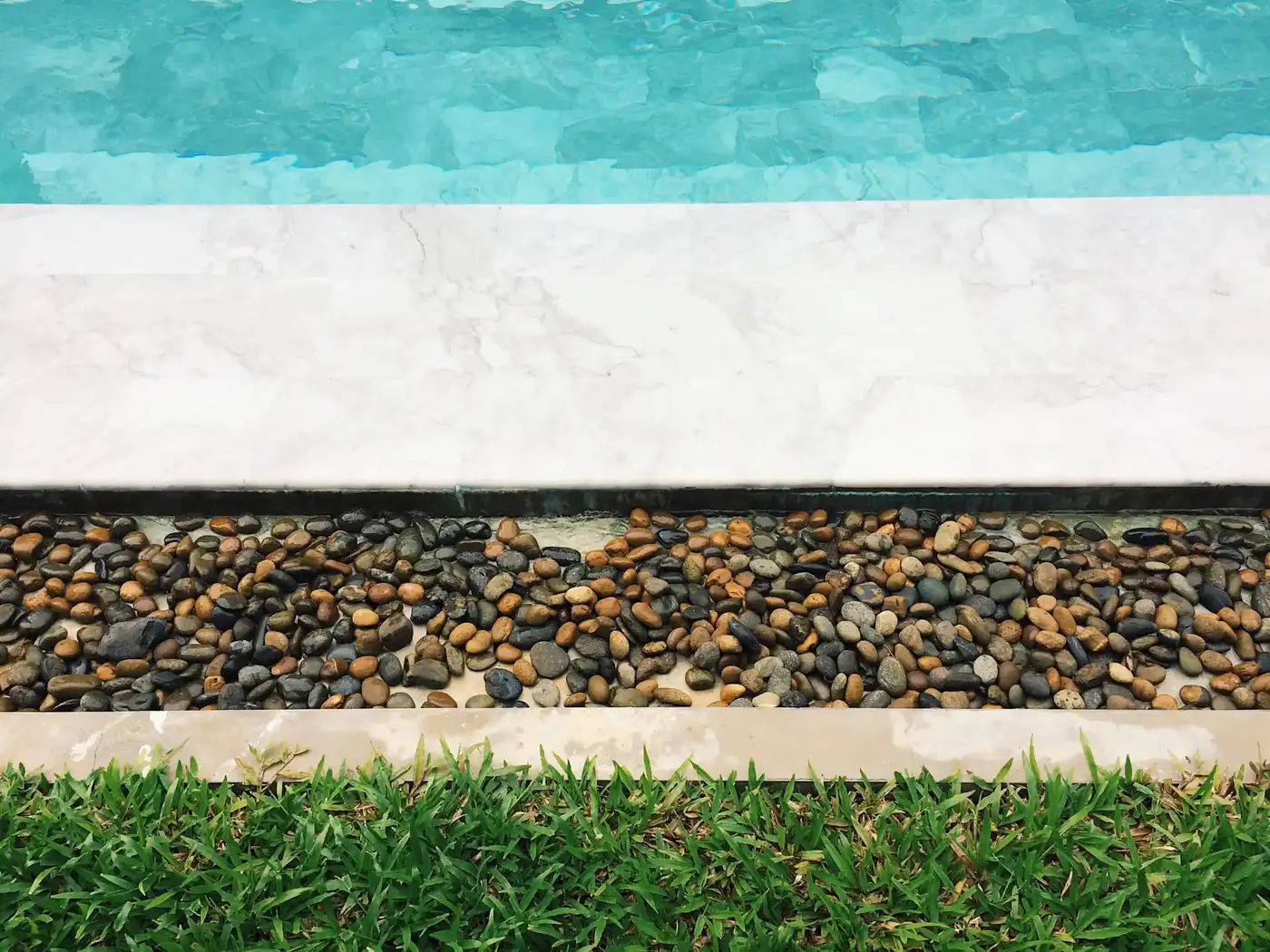
What a proper base looks like
- Excavation to 8 to 12 inches below finished grade for a pedestrian paver deck in Ontario. Less than 6 inches is not adequate for our frost depth.
- Geotextile fabric between subgrade and granular, which stops the base migrating into the soil over time. Inexpensive and routinely skipped.
- Granular A compacted in lifts, meaning 3 to 4 inch layers each compacted separately. A single deep dump compacted once will settle unevenly.
- 1 inch of bedding sand, screeded, not thicker. Excess bedding sand is a leading cause of rutting.
- Polymeric jointing sand, which locks the joints, resists weeds, and stops ants undermining the field.
Drainage, which is not optional
A pool deck must slope away from the pool at roughly two percent, about a quarter inch per foot. That keeps deck runoff, dirt, and lawn chemicals out of the water and prevents ice sheets forming against the coping in winter. On flat GTA lots where there is nowhere obvious for water to go, this usually means a channel drain along the low edge tied into a proper outlet.
If a quote for a pool deck does not mention excavation depth, base material, compaction, or drainage, it is not a complete quote. Those items are most of the labour and most of the reason a deck lasts.
Pool Deck Resurfacing: When It Makes Sense
Pool deck resurfacing puts a new wearing surface over existing concrete for $8 to $18 per square foot, roughly half the cost of tearing out and replacing. It is an excellent option in the right circumstances and a waste of money in the wrong ones.
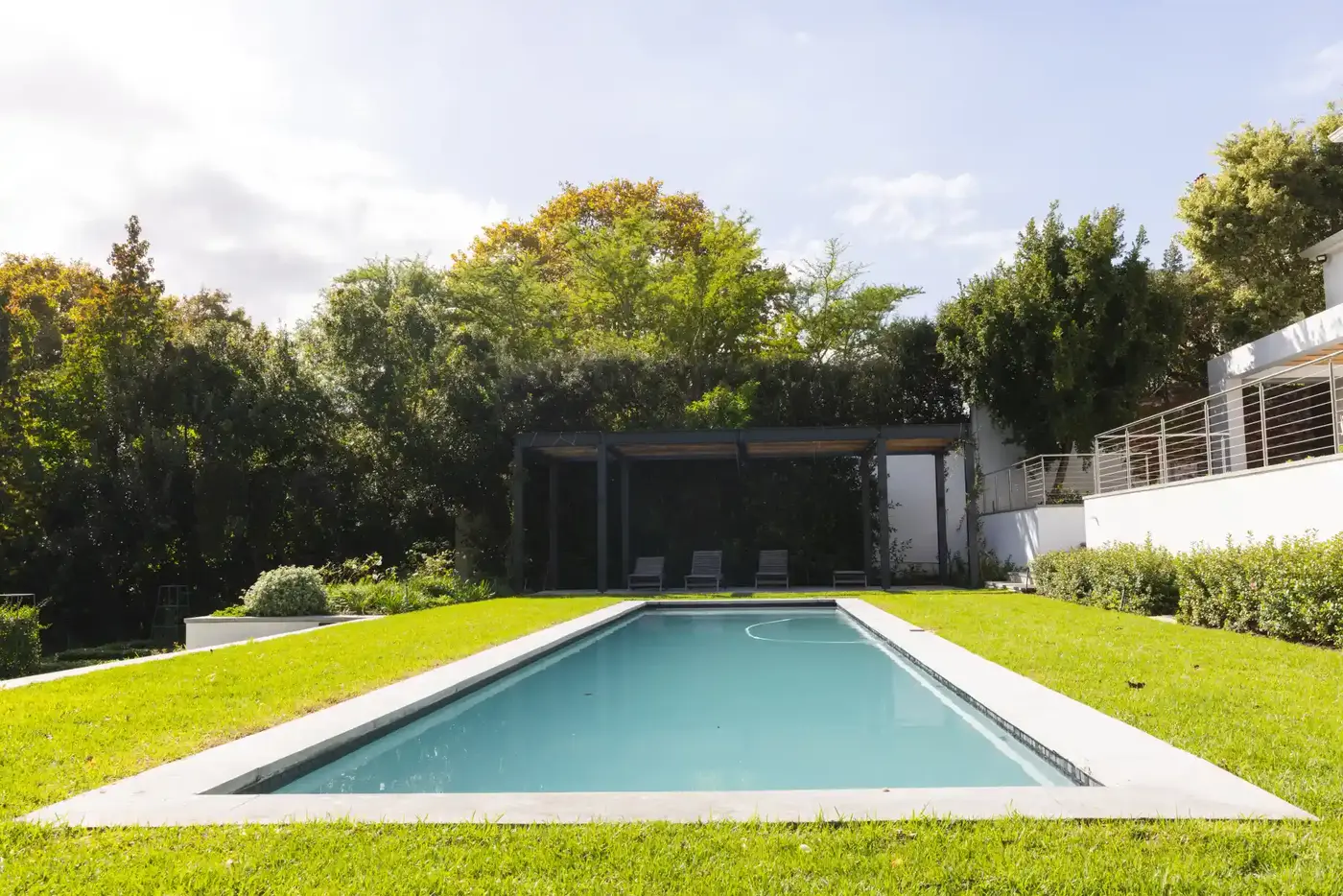
Resurface when
- The slab is structurally sound with no heaving or differential settlement
- Cracks are hairline and stable rather than growing season to season
- The problem is appearance: discolouration, worn texture, dated finish
- Drainage still works correctly and the slope is intact
Replace instead when
- Sections have heaved or settled relative to each other
- Cracks are wider than a few millimetres or clearly still moving
- The deck slopes toward the pool rather than away from it
- You want to change material entirely, for example concrete to pavers
The rule of thumb: an overlay copies whatever the slab underneath is doing. Cosmetic problems can be covered. Structural problems will reappear through the new surface within a season or two, and you will have paid twice.
Design Ideas That Work on GTA Lots
Most Toronto-area backyards are narrow, overlooked, and shorter than the magazines assume. These pool deck ideas and pool landscaping ideas are the ones that repeatedly work here.
Asymmetric deck widths
Go wide on the house side where the loungers and table live, and keep a four foot walkway on the far side. Concentrating the budget where people sit is far better than an even ribbon of deck nobody uses.
A contrasting border course
A soldier course in a darker paver frames the field, hides cut edges, and makes a modest deck read as intentional. It costs very little and changes the whole impression.
Planting beds against the fence
Ontario lots are overlooked. A layered bed of tall grasses and evergreens along the fence line buys privacy faster and cheaper than any structure, and softens a large paved area.
Integrated lighting
Low-voltage lights in the retaining wall or step risers turn the pool into an evening space and extend usable months well past swimming season. Install the conduit during the deck build; retrofitting means lifting stone.
A raised seating wall
A two-course wall along one deck edge gives casual seating for a crowd, defines the space, and removes the need for extra furniture on a tight lot.
Keep plant choices away from the edge
Avoid anything that sheds heavily within two metres of the water. Ornamental grasses, boxwood, hostas, and daylilies behave. Birches, willows, and most flowering trees will keep your skimmer busy all season.
If you are planning a full backyard rather than just a deck, our landscaping and backyard design service covers coping, decking, planting, and lighting as a single project, which avoids the seams and mismatched grades that come from hiring three trades separately.
The Bottom Line for GTA Homeowners
Budget $18 to $60 per square foot for a pool deck in the Greater Toronto Area, and $45 to $120 per linear foot for pool coping. Interlocking pavers are the best all-round choice for our freeze-thaw climate because the joints absorb ground movement and individual units can be reset. Concrete works well when the base is properly built, and natural stone is excellent provided it is a low-absorption grade.
Whatever surface you pick, spend the money on excavation depth, compaction, and drainage first. Those are invisible in every photograph and they are the entire difference between a deck that looks good for twenty years and one that needs attention in five. Swimpool 360 designs and builds pool decks, coping, and complete backyard surrounds across Toronto, the GTA, and York Region. Call 647-239-7665 for a free site visit. We respond to all inquiries within 24 hours.
Frequently Asked Questions: Pool Coping and Decks
What is pool coping and why does it matter?
Pool coping is the capping material finishing the top edge of the pool wall, bridging the shell and the deck. It caps and protects the structure, directs splash-out away from the pool, and gives swimmers a comfortable edge to grip. In vinyl liner pools, which dominate Ontario, the coping also carries the liner track, so coping and liner work are related jobs. It is the most-touched surface in the backyard, so material choice affects daily comfort, and a failed coping joint is a common route for water to get behind the pool wall.
How much does a pool deck cost in the GTA?
As of 2026, poured concrete runs $18 to $28 per square foot installed, stamped concrete $24 to $38, interlocking pavers $25 to $40, natural stone $35 to $60, and composite decking $30 to $50. A typical 600 square foot deck therefore ranges from roughly $11,000 for basic concrete to $36,000 for premium stone. Excavation, base preparation, and drainage move a quote more than the surface material does, and proper base depth matters more in Ontario than the finish you choose.
What is the best pool deck material for Ontario winters?
Interlocking pavers handle Ontario freeze-thaw cycles best, because a paver deck is many small units over a flexible granular base and ground movement is absorbed across the joints rather than cracking a slab. Individual pavers can also be lifted and reset if settlement occurs, which no poured surface allows. Concrete performs acceptably with a proper base and correctly placed control joints but will eventually crack somewhere. Natural stone is excellent provided it is a low-absorption grade; porous stone takes on water and spalls.
Can you resurface a pool deck instead of replacing it?
Yes, if the underlying slab is structurally sound. Resurfacing costs $8 to $18 per square foot in the GTA, roughly half the price of replacement. Options include micro-topping overlays, stamped overlays, and textured spray finishes, and it works well for surface cracking, discolouration, and worn texture. It is not appropriate where the slab has heaved, settled unevenly, or has structural cracks wider than a few millimetres, because the overlay mirrors whatever the slab underneath is doing within a season or two.
How wide should a pool deck be?
Four feet on all sides is the practical minimum for safe movement. Six to eight feet on at least one side gives room for loungers and a table, and the entry side benefits from ten to twelve feet where the lot allows. On narrow GTA lots the effective compromise is a generous deck on the house side for seating and a minimum four foot walkway on the far side, which concentrates the budget where people actually spend their time rather than spreading it evenly around the perimeter.
Related pool guides and services from Swimpool 360: