Ontario Pool Regulations: Permits, Fence Requirements and Enclosure Rules
The single most useful thing to understand about swimming pool regulations in Ontario is that there is no one province-wide pool law. Enclosure and fencing rules are set municipality by municipality, zoning setbacks are local, and only the electrical side is governed provincially. That is why two neighbours in different cities can be given genuinely different answers. This guide explains what applies almost everywhere, where the local variation lives, and how to sequence permits so a pool build does not stall in June.
Ryan Roy
Lead Pool Specialist, Swimpool 360
- Written for the Toronto & GTA Market
Who Actually Regulates Pools in Ontario
Three separate layers of authority touch a residential pool, and confusing them is the source of most bad information homeowners receive.
Your municipality
Sets the pool enclosure bylaw, zoning setbacks, lot coverage limits, tree protection, and issues the enclosure permit. This is where nearly all the variation lives, and it is the layer people most often get wrong by asking a friend in another city.
The Province of Ontario
Through the Ontario Building Code and the Ontario Electrical Safety Code, governs construction standards and electrical safety. The Electrical Safety Authority inspects all pool electrical work regardless of which city you are in.
Your conservation authority
If your property sits near a watercourse, wetland, valley slope, or floodplain, the local conservation authority may have jurisdiction over excavation and grading. This catches properties in parts of York, Durham, and the ravine areas of Toronto.
There is one more layer people forget entirely: if you live in a subdivision with restrictive covenants, or in a condominium or common-elements community, private rules can further limit pool size, fencing style, or equipment placement independently of anything the city says.
The Permits You Will Need
The phrase pool permit Ontario covers several distinct approvals. Here is what a typical GTA inground pool project requires.
| Approval | Issued By | Typical Cost | When |
|---|---|---|---|
| Pool enclosure permit | Municipality | $200 to $700 | Before excavation |
| ESA electrical notification | Electrical Safety Authority | $150 to $400 | Before electrical work |
| Building permit (if required) | Municipality | $300 to $1,200 | Before construction |
| Plumbing permit (if required) | Municipality | $100 to $400 | Before plumbing work |
| Conservation authority approval | Local conservation authority | $300 to $1,500 | Before any site work |
| Tree removal or injury permit | Municipality | $100 to $500 | Before excavation |
The enclosure permit is the one that governs the schedule, because most municipalities will not allow excavation to begin until it is issued. Processing commonly takes two to six weeks, and that stretches considerably in March through May when every pool project in the region applies at once.
The scheduling mistake that costs a season: homeowners sign a pool contract in April expecting to swim in July, then discover the enclosure permit takes six weeks in peak season. Apply in the winter. Permits are typically valid for six to twelve months, and a January application means an April start rather than a July one.
Pool Fence and Enclosure Requirements
Pool fence requirements in Ontario exist for one reason: drowning is a leading cause of accidental death for young children, and a compliant enclosure is the single most effective barrier. The rules are written to defeat a determined toddler, which explains details that otherwise seem fussy.
What is common across GTA municipalities
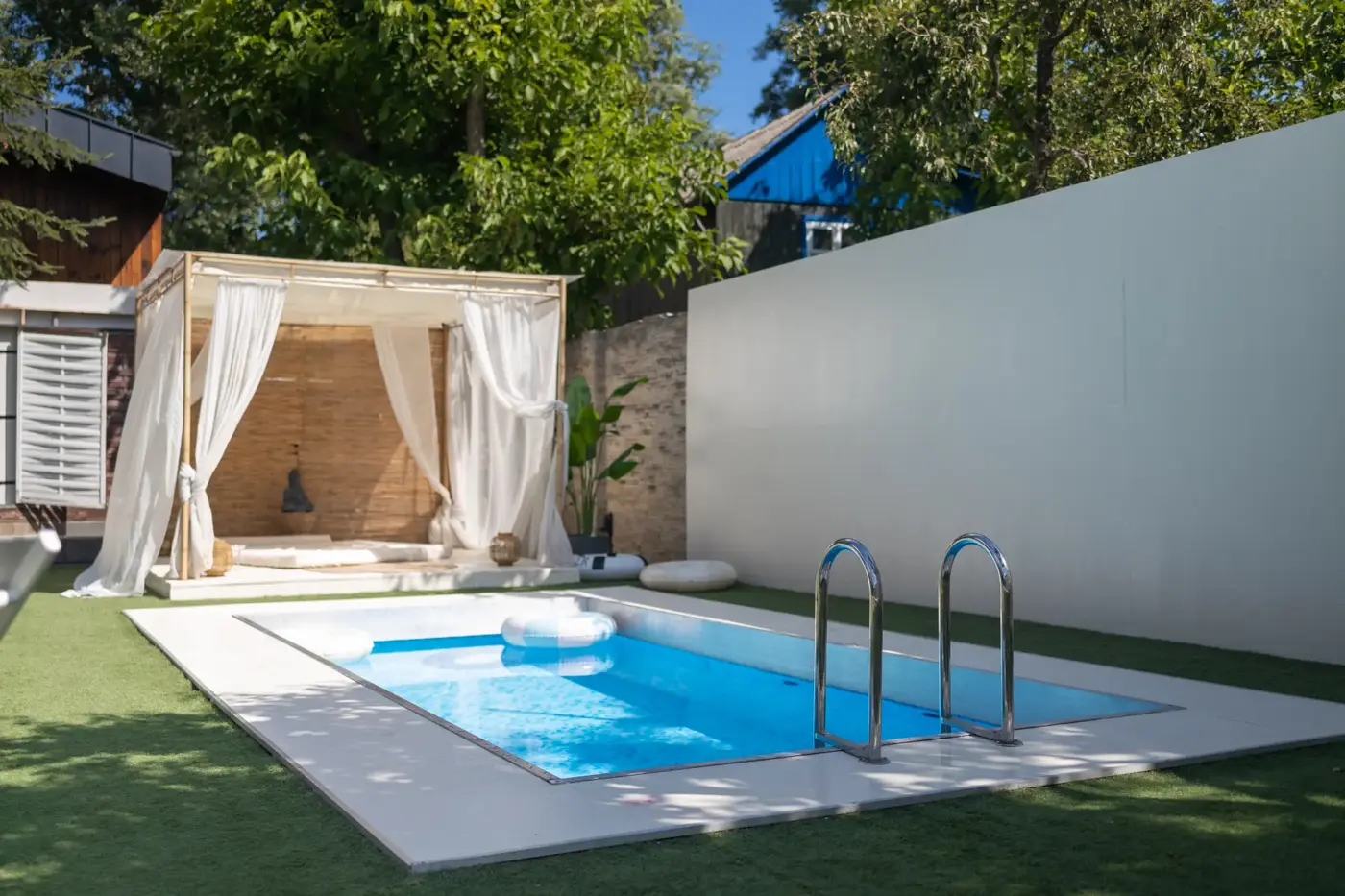
- Height: a minimum of 1.2 metres, and 1.5 metres in many GTA municipalities, measured from the grade outside the enclosure.
- No climbable outside face. Horizontal rails, lattice, and decorative features on the outside give a child a foothold and are generally prohibited.
- Maximum gap at the bottom, commonly around 100 millimetres, so a child cannot crawl underneath.
- Maximum spacing between vertical members, commonly around 100 millimetres, so a child cannot squeeze through.
- Continuous enclosure. The barrier must fully surround the pool with no gaps, which includes the sides of the house where it forms part of the enclosure.
- Applies to most pools: generally any pool able to hold water deeper than about 600 millimetres, which captures above-ground pools too.
The measurement detail that fails inspections
Pool fence height in Ontario is measured from the grade on the outside of the fence, not the inside. On a sloped lot, a fence that comfortably meets the requirement on the high side can fall short where the ground drops away. This is one of the most common reasons a fence passes visually and fails on inspection, and it is entirely avoidable by measuring at the lowest point of exterior grade before ordering panels.
Using the house as part of the enclosure
Many municipalities allow a house wall to form one side of the enclosure. Where they do, any door leading from the house directly into the pool area usually needs additional protection, such as an alarm or a self-closing device. Sliding patio doors and walkouts are frequently the weak point. Check this specifically, because it is a rule that varies more than most.
Temporary fencing during construction
Once excavation begins you generally must have temporary fencing in place around the open site, and it must stay until the permanent enclosure is complete and inspected. An open excavation full of rainwater is exactly the hazard the bylaw exists to prevent, and municipalities enforce this one seriously.
Gates: Where Most Inspections Fail
In our experience, more enclosure inspections fail on gate hardware than on anything else. The fence itself is usually fine. The gate is where the details get missed.
Self-closing
The gate must swing shut on its own from any open position, with no push required. Spring hinges lose tension over time, so this is worth retesting each spring.
Self-latching
It must latch automatically when it closes. A gate that closes but needs a nudge to catch is a fail, and it is the most common single defect we see.
Latch mounted high, on the pool side
Typically at least 1.5 metres from the ground and on the inside face, so a child outside the enclosure cannot reach through or over to release it.
Opens outward, away from the pool
So that a child leaning on the gate pushes it closed rather than open.
Lockable
Most bylaws require the gate to be capable of being locked, and expect it kept locked when the pool is not supervised.
An ongoing obligation, not a one-time test: the enclosure must remain compliant for the life of the pool, not just on inspection day. Spring hinges weaken, latches drift out of alignment, and fence boards loosen. Testing the gate every spring at opening takes ten seconds and is the most valuable safety habit a pool owner has.
Electrical, Bonding and the ESA
This is the one area governed provincially rather than locally, which means the rules are the same in Oakville as in Uxbridge. All pool electrical work in Ontario must be reported to the Electrical Safety Authority and inspected.
What bonding means
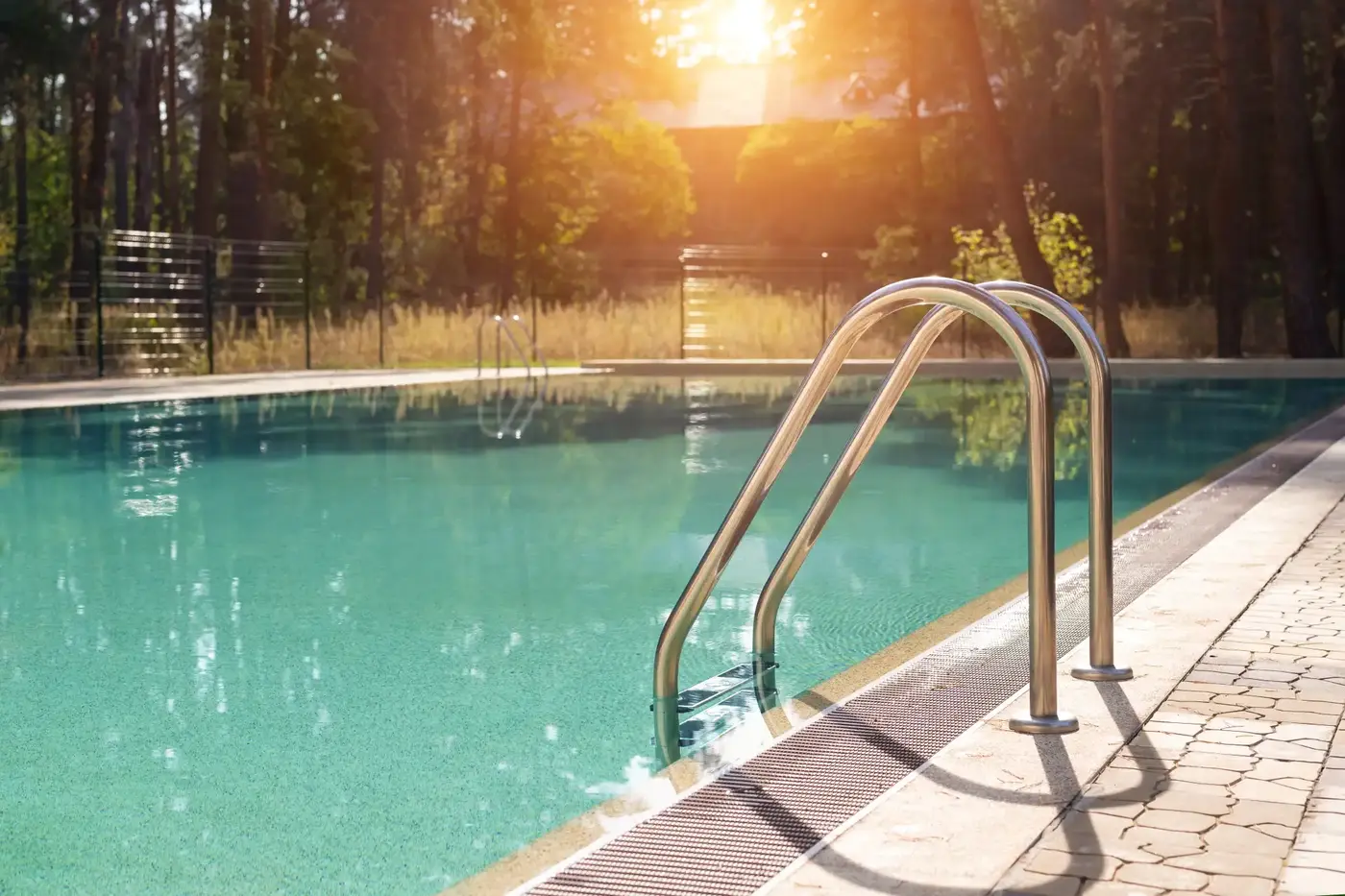
Bonding connects all metal components in and around the pool to a common conductor so that no voltage difference can develop between them. If a fault ever put current where it should not be, bonding ensures a swimmer touching a handrail and standing on a wet deck is not the path that current takes.
In practice, bonding typically includes the pool structure's reinforcing steel or wall panels, ladders and handrails, the pump and heater, metal fencing within about three metres of the water, and metal within the deck itself. The specific requirements are set out in the Ontario Electrical Safety Code, and a licensed electrical contractor will handle the detail.
Why timing matters
The bonding grid must be inspected before it is covered by concrete or backfill. If your contractor pours a deck before the ESA inspection happens, the inspector cannot verify what is underneath, and the remedy is expensive. Any competent pool builder schedules this properly, but it is worth asking the question directly before the deck stage.
GFCI protection
Pool equipment circuits and any receptacles near the pool require ground fault protection. This is why a persistently tripping GFCI at the equipment pad should never be bypassed or replaced with a standard breaker. It is detecting something, and around water that something matters.
Setbacks, Easements and Site Constraints
Zoning determines where on the lot a pool can physically go, and on typical GTA lots this is often the binding constraint on pool size rather than budget.
- Side and rear yard setbacks commonly run 1.2 to 1.5 metres from the property line, though whether that is measured to the water, the pool wall, or the deck edge varies by municipality and changes your usable area considerably.
- Equipment pad setbacks are often larger than pool setbacks because of noise. A variable speed pump helps here, since it runs quiet enough to be a non-issue for neighbours.
- Lot coverage limits cap the total percentage of the lot covered by structures. Depending on the municipality, pools and decks may or may not count toward this.
- Easements and rights of way for utilities, drainage, or shared driveways are registered on title and typically cannot be built over at all. Pull your survey early.
- Septic systems require substantial clearance from both the tank and the leaching bed, which on rural and semi-rural properties across York and Durham often dictates the entire layout.
- Tree protection bylaws in most GTA municipalities protect trees above a certain trunk diameter, including some on neighbouring property whose roots extend into your yard. Excavating within the protected zone may need a permit or may not be allowed.
Before you fall in love with a design: get a copy of your property survey and have someone walk the site against it. We have seen homeowners commit to a pool size that a registered drainage easement made impossible, and finding that out after signing a contract is an expensive way to learn it.
Sequencing and Realistic Timelines
Here is how the approval process actually unfolds for a GTA inground pool, and why winter is the right time to start it.
Step 1: Survey and site review
Confirm setbacks, easements, septic, and trees against your registered survey. One to two weeks.
Step 2: Design and drawings
Site plan showing pool, deck, equipment, and the proposed enclosure. Two to three weeks.
Step 3: Enclosure permit application
Two to six weeks, and longer during the March to May rush. This is the schedule-critical item.
Step 4: Conservation approval if applicable
Four to twelve weeks, and it runs in parallel rather than after. Start it early if your property is near a watercourse.
Step 5: Construction with staged inspections
Bonding inspected before backfill, electrical before the deck, and final enclosure inspection before the pool is used.
Step 6: Final enclosure sign-off
The permanent fence and gates must pass before the pool goes into service. Temporary fencing stays up until this happens.
Total approvals alone commonly run six to twelve weeks before a shovel moves, and considerably longer where a conservation authority is involved. Our pool installation timeline guide covers what happens after the permits are in hand.
The Bottom Line for Ontario Homeowners
Swimming pool regulations in Ontario come from your municipality for fencing and zoning, and from the province for electrical safety. Expect an enclosure at least 1.2 to 1.5 metres high with self-closing and self-latching gates, an ESA notification and bonding inspection, and setbacks of roughly 1.2 to 1.5 metres from property lines. Confirm every number with your own city, because neighbouring municipalities genuinely differ.
The practical advice is simple: apply for permits in winter, not spring, and get your survey reviewed before you commit to a design. Swimpool 360 has built pools across Toronto, the GTA, and York Region since 2010, and we handle permit applications, inspection scheduling, and enclosure compliance as part of every installation. Call 647-239-7665 for a free site review. We respond to all inquiries within 24 hours.
Frequently Asked Questions: Ontario Pool Regulations
Do you need a permit to build a pool in Ontario?
Yes, and usually two or three. Almost every Ontario municipality requires a pool enclosure permit before excavation begins, and all electrical work requires a separate notification to the Electrical Safety Authority. A building permit may also be needed depending on the municipality and the design, particularly for structures or raised decks. Requirements are set by each municipality rather than by one province-wide pool law, so confirm with your local building department before work starts. Enclosure permits commonly take two to six weeks, longer in spring.
What are the pool fence requirements in Ontario?
Requirements are set by municipal bylaw rather than one provincial statute, so exact figures vary by city. Across most GTA municipalities the common requirements are an enclosure at least 1.2 to 1.5 metres high measured from outside grade, no climbable features on the outside face, gaps small enough that a child cannot pass through, and self-closing, self-latching gates. Enclosures are typically required for any pool holding water deeper than about 600 millimetres, which captures most above-ground pools as well as inground ones.
How high does a pool fence have to be in Ontario?
Most Ontario municipalities require at least 1.2 metres, and many GTA municipalities require 1.5 metres. The measurement is taken from the grade on the outside of the enclosure. That detail matters on a sloped lot, where a fence can meet the height on one side and fall short where the ground drops away, and it is a common reason an otherwise good fence fails inspection. Some municipalities also set a maximum height. Confirm the figure with your own city rather than copying a neighbour's installation.
Does a pool need an electrical permit in Ontario?
Yes. All pool electrical work in Ontario must be reported to the Electrical Safety Authority and inspected, covering pump and heater circuits, pool lighting, and the equipotential bonding grid. Bonding is the requirement that surprises homeowners: metal components within roughly three metres of the water, including ladders, handrails, reinforcing steel, and metal fencing, must be bonded together so no voltage difference can develop. Bonding must be inspected before it is buried, so it has to be scheduled into the build rather than added afterwards.
How far does a pool have to be from the property line in Ontario?
Setbacks are set by municipal zoning and commonly range from 1.2 to 1.5 metres from side and rear property lines, with larger setbacks often required for the equipment pad because of noise. Some municipalities measure to the pool wall and others to the deck edge, which changes your usable layout significantly. In practice, septic systems, registered easements, rights of way, and tree protection bylaws constrain placement more often than the setback itself, so a survey review before design is well worth doing.
Related pool guides and services from Swimpool 360: