Interlock vs Flagstone vs Stamped Concrete Patio: Ontario Cost Guide 2026
Choosing between an interlocking patio, a flagstone patio and a stamped concrete patio is mostly a decision about how each surface ages through an Ontario winter, and only partly about how it looks on day one. All three can be excellent. All three can fail early when the base underneath is rushed. This guide sets out what each material costs installed in the GTA in 2026, how long it lasts, what upkeep it asks of you, and what to check before you sign a quote.
Ryan Roy
Lead Pool Specialist, Swimpool 360
- Written for the Toronto & GTA Market
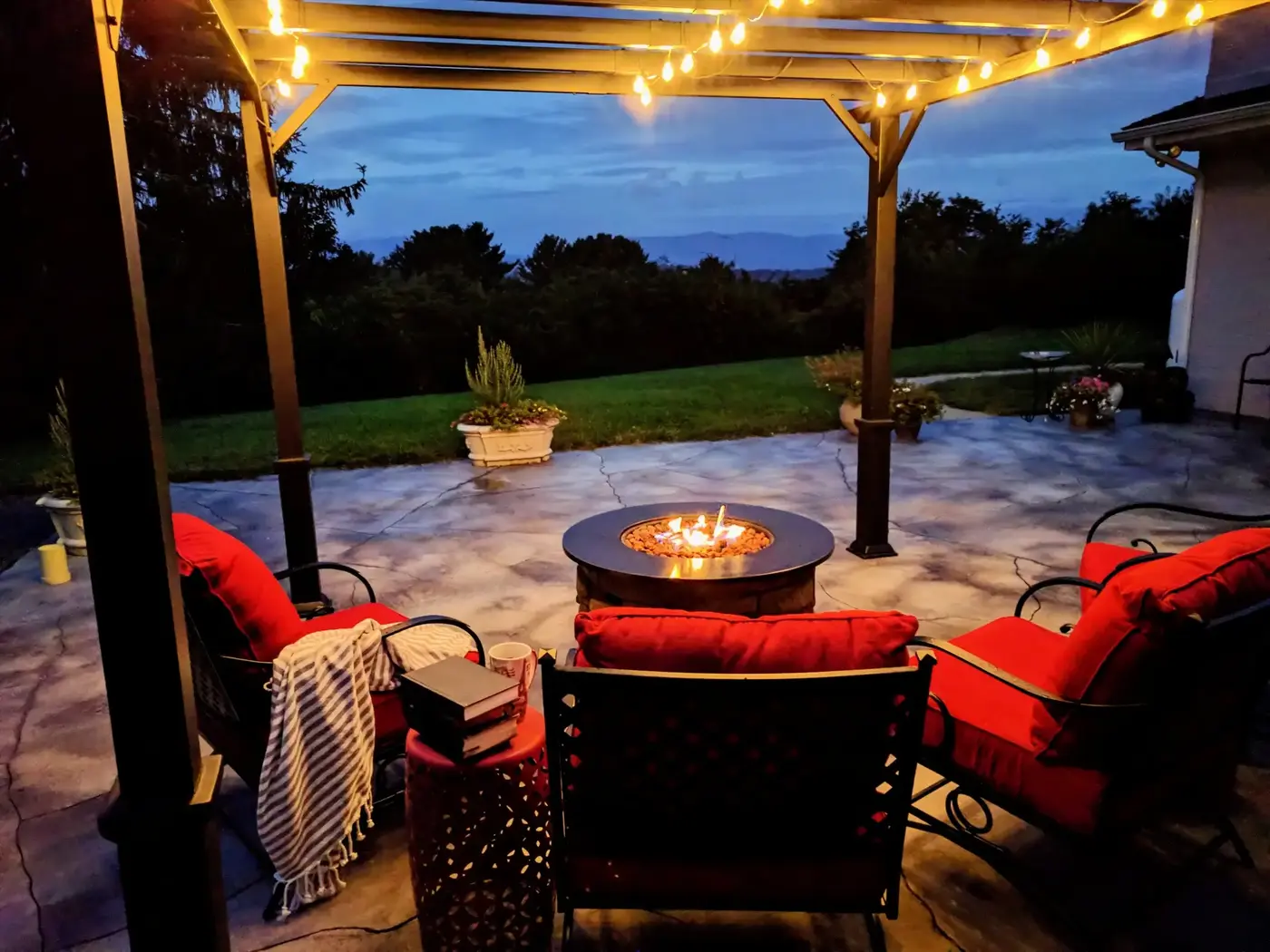
What Hardscaping Covers
Hardscaping is the built, non-living part of a landscape: patios, walkways, steps, retaining walls, seating walls, edging and the drainage that keeps them working. Softscaping is everything that grows. The two are designed together, but hardscaping comes first because it sets the grades that water, plants and people will follow for decades.
A patio is usually the largest and most expensive hardscape element in a GTA backyard. If yours will sit next to a pool, the priorities change (slip resistance, coping joints, splash-out), and our pool coping and deck materials guide covers those surrounds in detail. This article is about the general backyard patio: the dining area off the kitchen door, the fire pit circle, the path to the garage.
Interlocking Patio Pavers: The Ontario Default for Good Reason
An interlocking patio is built from manufactured concrete pavers laid tight over a compacted granular base, held in by an edge restraint, with sand swept into the joints. Friction between the units and the joint sand is what makes them "interlock". The result is a flexible pavement: it can move a little with frost and settle back without cracking.
Cost and lifespan
Expect $25 to $40 per square foot installed in the GTA for 2026. The lower end covers a standard paver in a simple pattern on an open site. The upper end covers large-format slabs, premium textured lines, multiple colours, curves with lots of cutting, and backyards where every load of gravel goes in by wheelbarrow. A well-built paver patio lasts 30 to 50 years.
Freeze-thaw behaviour
Pavers are dense, factory-cured concrete, so the units rarely spall. The weak points are the base and the joints: water sitting in the base lets frost lift sections unevenly, and washed-out joint sand lets pavers rock. Both are installation problems, not material problems.
Maintenance
- Polymeric sand hardens when wetted and slows weeds and ants. Expect spot top-ups every few years and a full refresh after 8 to 12.
- Sealing is optional. It deepens colour and resists stains, but unsealed pavers perform fine.
- Settlement is a small fix. Lift the dipped units, add and compact base, reset, re-sand. The patch blends in because the pavers are the originals.
Most interlock Toronto crews will tell you the same thing: the paver brand matters far less than the person compacting the base. Ask how many lifts they compact and with what equipment before you ask about colours.
Flagstone Patio: Dry-Laid or Mortared on a Slab
A flagstone patio uses flat slabs of quarried natural stone, often Ontario limestone, sandstone or imported stone, either as irregular pieces fitted like a puzzle or as cut rectangles in a pattern. It is the most natural looking of the three options and the one that ages most gracefully, provided the stone is dense enough for our winters.
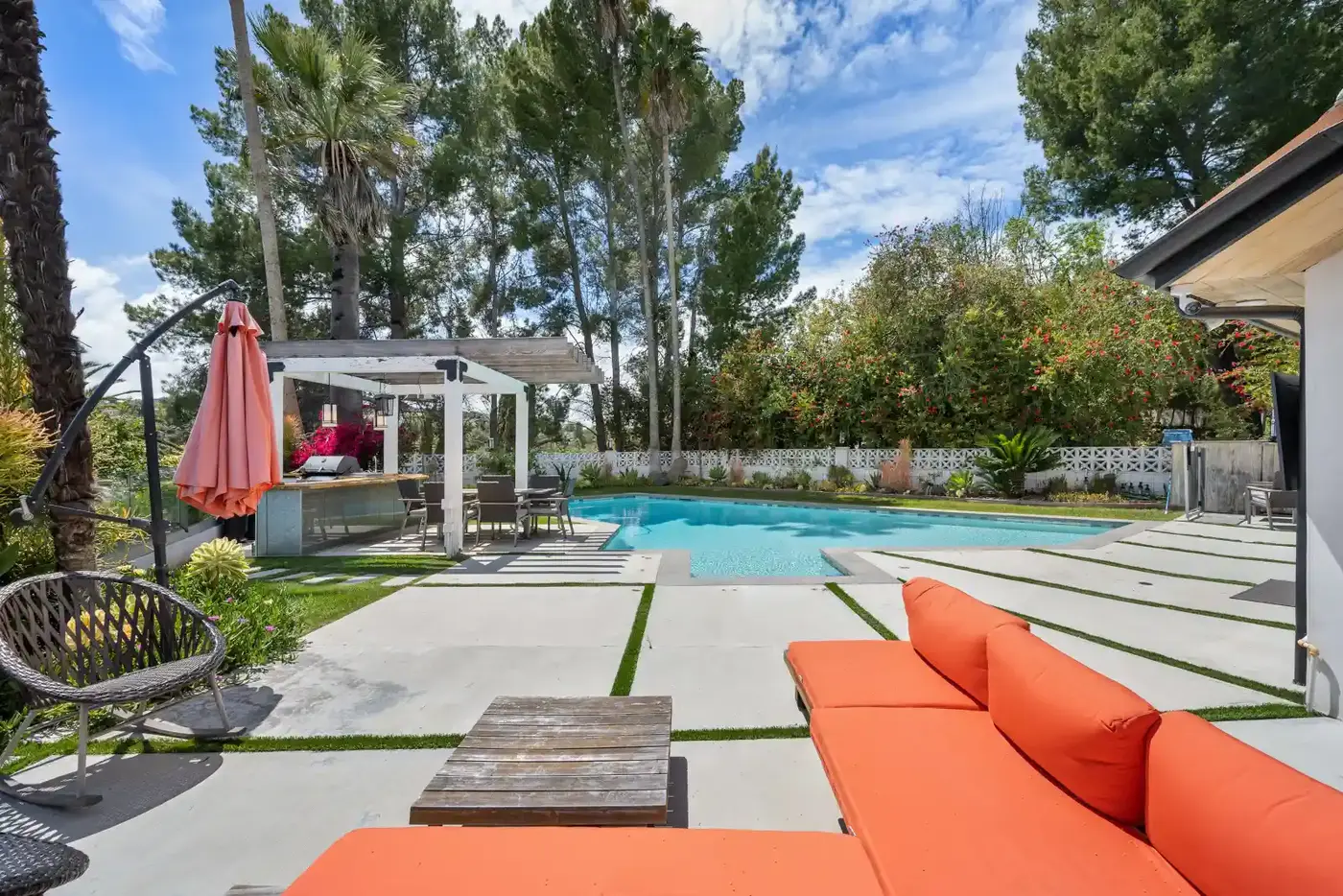
Cost and lifespan
Budget $35 to $60 per square foot installed. Thicker stone, irregular pieces that need a lot of hand fitting, and mortared installations sit toward the top of that range. Dense stone on a good base can last 40 to 60 years, which is why stone patios are often still in place long after the house has changed hands twice.
Dry-laid on a granular base
Dry-laid flagstone sits on the same compacted Granular A base as pavers, bedded in a thin layer of screenings, with joints filled with polymeric sand, stone dust or even creeping thyme in wider gaps. It is flexible in the same way an interlocking patio is: frost movement is absorbed in the joints and any stone can be lifted and reset. For most Ontario backyards this is the method we recommend. Use stone roughly 1.5 to 2 inches thick or more, because thin pieces crack under point loads like a chair leg.
Mortared on a concrete slab
Mortared flagstone is bonded to a reinforced concrete slab with mortar between the stones. It looks crisp and formal, but it combines the weaknesses of both systems: the slab can crack like any concrete, and the mortar cracks with it. Once a joint opens, water gets under the stone, freezes, and starts popping pieces loose. If you want this look, insist on a properly built slab with control joints that line up with stone joints, and expect to repoint over time.
Whichever method you choose, ask the supplier whether the stone has a track record in Ontario winters. Dense limestone does well; soft, layered stone can flake apart after a few seasons of freezing.
Stamped Concrete Patio: Seamless, Cost-Effective, Needs Care
A stamped concrete patio is a poured slab that is coloured, then pressed with textured mats while still plastic to imitate stone, slate, brick or wood. The appeal is a continuous surface with no joints to weed, at a price that usually sits slightly below pavers.
Cost and lifespan
Plan on $24 to $38 per square foot installed. Multiple colours, borders in a contrasting pattern, steps and complex shapes push the price up. For comparison, a plain broom-finish slab runs $18 to $28. A properly built stamped patio typically lasts 20 to 25 years before it looks tired.
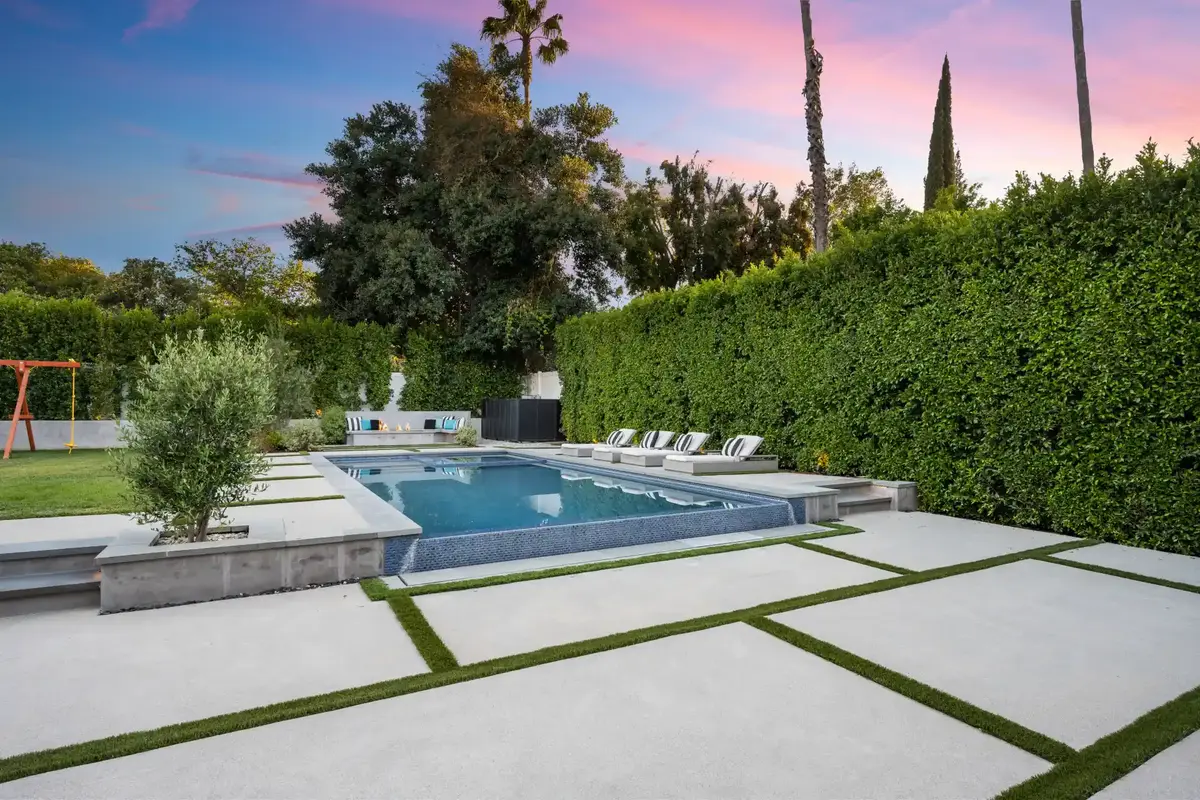
Freeze-thaw behaviour
Concrete is rigid, so frost movement shows up as cracks rather than gentle shifts. A good contractor plans for it: an air-entrained exterior mix, adequate thickness with reinforcement, a compacted granular base, and control joints at regular intervals so the slab cracks where it is meant to, hidden in the pattern lines.
Maintenance and resealing
- Reseal every 2 to 3 years. Sealer protects the colour and keeps water and salt out. Skipping it is the usual reason stamped concrete fades and scales.
- Ask for an anti-slip additive. Glossy sealer can be slick when wet or icy.
- Go easy on de-icing salt, especially the first winter. Use sand or a product the installer approves.
- Repairs will show. Matching colour and texture on an aged slab is very hard.
Patio Cost by Size and Side-by-Side Comparison
Typical installed GTA totals for 2026, including excavation, base, edging and a basic layout. Steps, walls, lighting and difficult access are extra. Small patios often cost more per square foot because setup costs are fixed.
| Patio Size | Stamped Concrete ($24 to $38) | Interlocking Pavers ($25 to $40) | Flagstone ($35 to $60) |
|---|---|---|---|
| 200 sq ft (about 14 x 14 ft) | $4,800 to $7,600 | $5,000 to $8,000 | $7,000 to $12,000 |
| 400 sq ft (about 20 x 20 ft) | $9,600 to $15,200 | $10,000 to $16,000 | $14,000 to $24,000 |
| 600 sq ft (about 20 x 30 ft) | $14,400 to $22,800 | $15,000 to $24,000 | $21,000 to $36,000 |
Cost is only one column. Here is how the three compare on everything else that matters over twenty years.
| Factor | Interlocking Pavers | Flagstone (dry-laid) | Stamped Concrete |
|---|---|---|---|
| Typical lifespan | 30 to 50 yrs | 40 to 60 yrs | 20 to 25 yrs |
| Freeze-thaw | Excellent | Excellent if low absorption | Good with joints and sealer |
| Routine upkeep | Top up polymeric sand | Joint fill, occasional resetting | Reseal every 2 to 3 yrs |
| Repairs | Lift and reset, invisible | Lift and reset, invisible | Patch, usually visible |
| Look | Wide range, classic to modern | Natural, one of a kind | Seamless, imitates stone |
The short answer
- Best all-round choice for most GTA yards: interlock. Durable, repairable, predictable cost.
- Best long-term character: dry-laid flagstone in a dense stone, if the budget stretches.
- Best for a seamless look at a lower price: stamped concrete, if you will actually reseal it.
Base, Excavation and Drainage
When a patio fails, the surface is rarely the problem. The base is. Southern Ontario soils are often heavy clay that holds water, and water that freezes under a patio lifts it.
What a sound patio base includes
- Excavation of about 8 to 12 inches below finished grade for a walking patio, more on soft or wet ground, and more again anywhere a vehicle or hot tub will sit.
- All topsoil removed. Organic soil decomposes and compresses, and the patio follows it down.
- Geotextile fabric over clay subgrade so the granular does not slowly sink into the soil.
- Granular A placed in lifts of 3 to 4 inches, each compacted before the next goes in. One thick layer compacted only at the top will settle.
- A thin bedding layer, about an inch, and edge restraint spiked into the base so pavers cannot creep outward.
Slope and where the water goes
The finished patio should fall away from the house at about 2 percent, roughly a quarter inch per foot, so a 12 foot deep patio drops about 3 inches from the house wall to its outer edge. Water then needs somewhere to go: a lawn or garden bed that can absorb it, a swale, or a drain tied into a proper outlet. Never direct runoff onto a neighbour's property or toward a window well. If the yard slopes enough that the patio needs to be cut in or built up, that is a retaining wall question, and our guide to retaining wall ideas and costs explains block walls and the drainage behind them.
Where corners get cut: a low quote often hides a shallow dig, Granular A compacted once, or no fabric on clay. None of it is visible on completion day; all of it shows up after two or three winters as dipping edges and rocking pavers. Get excavation depth, base thickness and lift size written into the quote, and check the depth yourself before the base goes in.
Patio Design Ideas for GTA Backyards
Size the patio for what you will do on it: a table for six needs roughly 12 by 12 feet once chairs are pulled out. These ideas add the most for the money.
A contrasting border
A soldier or sailor course of pavers in a darker tone, or a cut-stone edge around a flagstone field, frames the patio and hides cuts. On stamped concrete, a border stamped in a different pattern does the same job.
Mixed materials
An interlock field with natural stone steps or an accent band gives the look of stone at closer to paver pricing. Limit the palette to two or three materials.
A fire pit zone
A circular area of pavers or stone around a fire feature creates a natural gathering spot. Many GTA municipalities restrict wood-burning fires, so check your local bylaw first; gas fire tables usually avoid the problem.
Seating walls
A wall about 18 to 20 inches high along one edge seats a crowd without extra furniture, holds back a slight grade change, and can be capped with stone to match the patio.
Wide, shallow steps
Where the patio meets the back door or a lower lawn, generous steps feel better than narrow ones. Keep every riser the same height; an uneven step is a trip hazard.
Lighting conduit, laid now
Run empty conduit under the patio during the build, even if lighting is a future project. Step lights, wall cap lights and path lights then cost far less to add, with no pavers to lift.
Our landscaping and hardscaping service designs patios, walls, steps and planting as one project, so grades, drainage and materials work together. If your patio connects to a raised deck, see our guide to composite vs wood deck costs.
Patio Installation Timing, Resale and Comparing Quotes
When to plan and when to build
The best hardscaping contractors in the GTA usually have spring booked by March, so fall and winter are for site visits, design and quotes. A fall build works too: paver and stone work can continue until the ground freezes, usually by late November in the GTA. Poured concrete has a shorter window because it must stay above freezing while it cures, so stamped patios are best poured by mid fall or pushed to spring.
Resale and repairability
Buyers notice the condition of a patio more than its material. A level paver or stone patio reads as an asset; a cracked, faded slab reads as a removal job. Because interlock and dry-laid flagstone repair invisibly, they tend to stay presentable with less effort. Stamped concrete can look excellent at sale time if it has been resealed on schedule.
How to compare patio quotes
- Same scope on every quote: area, material, pattern, borders, steps and walls listed line by line.
- Base specification in writing: excavation depth, Granular A thickness, lift size, fabric, bedding material.
- Drainage plan: slope, where the water goes, and any drains or outlets included.
- Material named: the paver line or stone type and thickness, not just "interlock" or "flagstone".
- Disposal and access: removal of old concrete or sod, and lawn repair after machinery.
- Warranty and insurance: a written workmanship warranty, liability insurance and WSIB clearance where it applies, plus utility locates through Ontario One Call before digging.
If two quotes differ by thousands of dollars on the same area, the gap is almost always in the base, the drainage or the disposal. Ask each contractor to explain theirs.
The Bottom Line on Patio Materials
For most Ontario backyards an interlocking patio at $25 to $40 per square foot is the safest all-round choice: it handles freeze-thaw, repairs invisibly and suits almost any house. A dry-laid flagstone patio at $35 to $60 costs more and lasts longest if the stone is dense. Stamped concrete at $24 to $38 gives a seamless look for slightly less, as long as you budget for resealing every two to three years.
Whatever you choose, the excavation, compacted base and slope decide how it looks in ten years. Get quotes in the fall or winter to secure a spring slot. Swimpool 360 designs and builds patios, walls and complete backyards across Toronto, the GTA, York Region and Durham. Call 647-239-7665 for a free site visit and a written, line-by-line quote.
Frequently Asked Questions: Interlock, Flagstone and Stamped Concrete Patios
How much does an interlocking patio cost in Ontario?
In 2026 an interlocking patio in the GTA typically costs $25 to $40 per square foot installed, including excavation, a compacted granular base, edge restraint and polymeric sand. That is roughly $5,000 to $8,000 for 200 square feet, $10,000 to $16,000 for 400 and $15,000 to $24,000 for 600. Premium pavers, tight access, steps and seating walls push the price toward the top of the range.
Is flagstone or interlock better for Ontario winters?
Both handle Ontario winters well on a deep, compacted granular base, and interlock is the more forgiving of the two. Any paver can be lifted and reset after settlement, and dry-laid flagstone is just as repairable, though its irregular joints need more upkeep. Mortared flagstone on a slab is the riskiest choice, because cracked mortar lets water in. With any stone, ask for a dense, low-absorption grade.
Does a stamped concrete patio crack in Ontario?
Expect some cracking over the life of any concrete slab, stamped or not; a good installer controls where it happens. Control joints hidden in the pattern, an air-entrained mix, reinforcement and a compacted base keep cracks mostly in the joints. Reseal every two to three years to protect the surface from water and salt. Repairs rarely match the original colour, which is the main trade-off against pavers.
When is the best time to book patio installation in the GTA?
Book in fall or winter for a spring build, because the better GTA hardscaping contractors usually fill spring schedules by March. A fall build also works if it finishes before the ground freezes, usually by late November in the GTA. Poured concrete has a shorter fall window than pavers because it must stay above freezing while it cures.
How deep should a patio base be in Ontario?
Plan on excavating about 8 to 12 inches below finished grade for a walking patio, and deeper on soft clay or wet ground. Use Granular A compacted in 3 to 4 inch lifts over geotextile fabric, with a thin bedding layer for pavers, and slope the surface away from the house at about 2 percent, roughly a quarter inch per foot. A quote that leaves out depth, base material and slope is not complete.
Related landscaping guides and services from Swimpool 360: