INTERLOCK INSTALLATION

Interlock Installation Toronto & GTA

Swimpool 360 handles interlock installation for patios, walkways, pool surrounds, steps and landings across Toronto, York Region and Durham, plus repairs on interlock that has sunk or filled with weeds. Every job follows a written base specification you can check in the open dig, before pavers cover it.

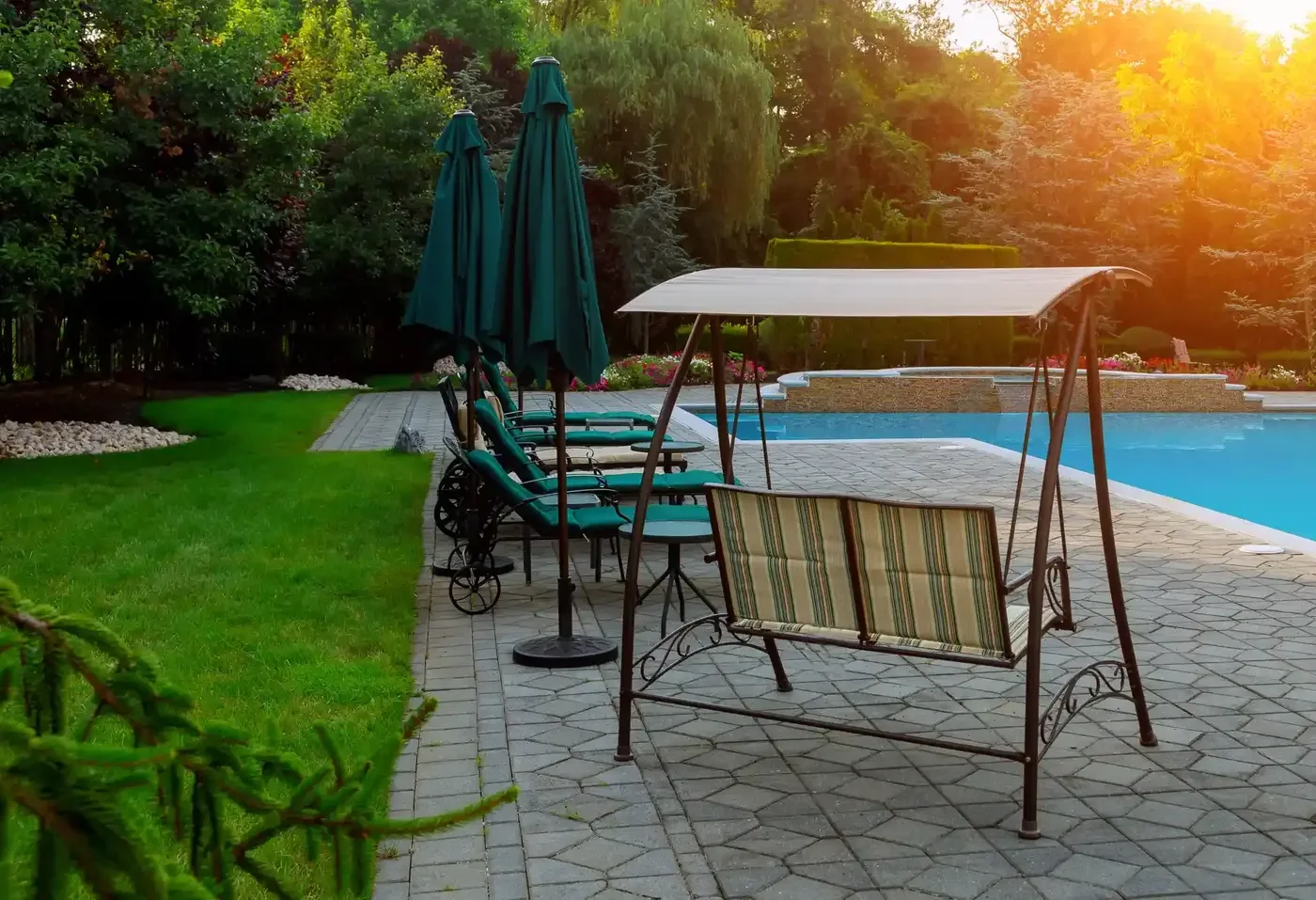
Interlock installation in a Toronto backyard: swing bench and patio set on an interlocking paver patio beside a lawn and pool in warm evening sun
PAVER FAMILIES WE INSTALL

Interlocking Pavers, Slabs, Stone and Porcelain: How Each One Goes Down

Standard concrete pavers, usually 60 mm thick, are the most forgiving interlocking pavers. Small units ride over minor base variation, and a herringbone pattern resists twisting feet and wheeled barbecues best. Large-format slabs, from about 24 inches across, show any high spot as a lip, so we screed to a tighter tolerance and set each one with a mechanical lifter. Grass joints like these need a wider set-out.

Natural stone comes calibrated (sawn to even thickness) or uncalibrated; uncalibrated pieces are bedded one at a time, which is where the extra labour in a stone quote comes from. Porcelain pavers, about 20 mm thick, absorb almost no water but cannot bridge a soft spot, so they go on clear chip or a concrete pad with a porcelain-rated joint filler. Still choosing a surface? Our interlock vs flagstone vs stamped concrete guide weighs lifespan and upkeep; this page is about how we build.
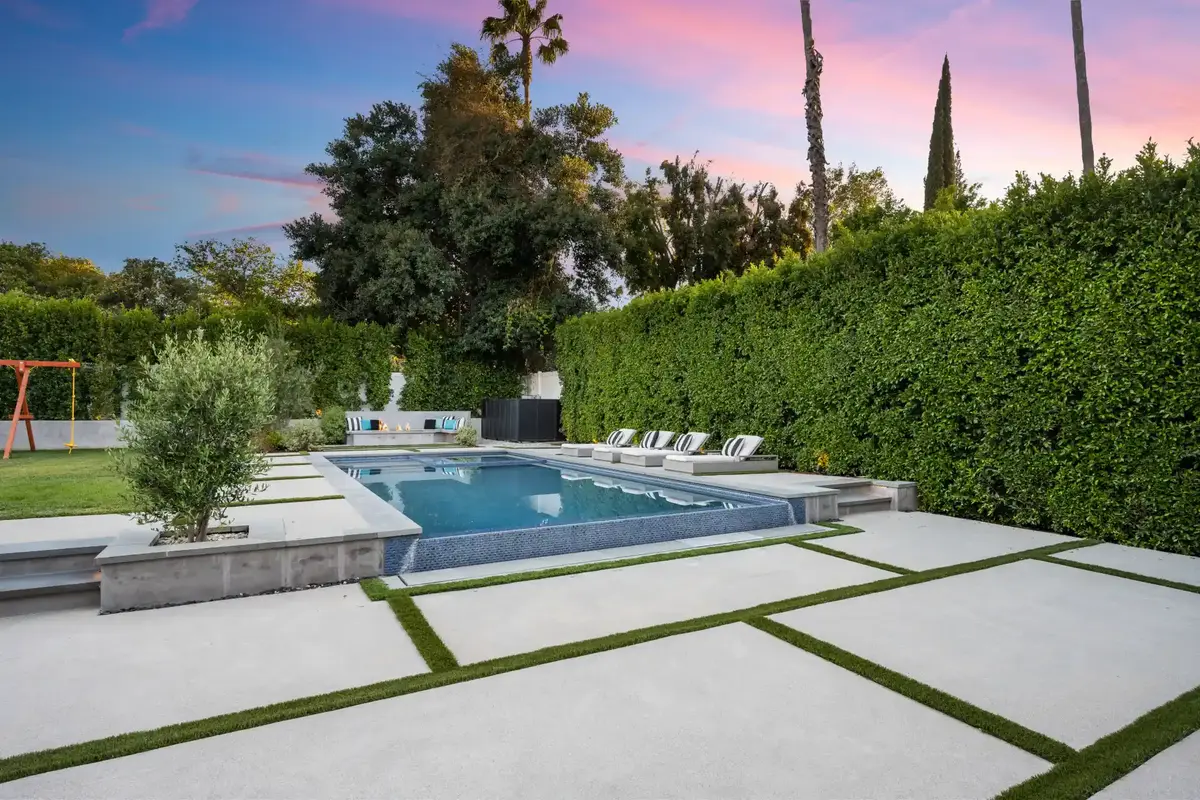
Large light concrete slab pavers set with grass joints in a modern backyard, a raised pool with a stone wall and a tall hedge behind at sunset

Book a Free Interlock Site Visit

We measure, check your grades and drainage, and send a written quote that spells out the base you are paying for. Call 647-239-7665 or request a visit online.

THE BUILD SPEC

Our Interlock Installation Spec, Layer by Layer

Our standard for a walking patio or walkway on a typical GTA lot. Wet clay, hot tub pads and anything carrying a vehicle get a deeper section, written into the quote.

Interlock installation base and paving specification used by Swimpool 360
Layer What we install Why it matters
Excavation 8 to 10 inches below finished grade, 10 to 12 on wet clay; sod, topsoil and roots all removed Organic soil keeps rotting, and the interlock follows it down.
Subgrade Plate compacted and probed; soft pockets replaced with granular A base is only as firm as the ground under it.
Geotextile Fabric over clay or silt, lapped at seams Keeps clay and stone from mixing.
Granular A Lifts of 4 inches or less, each compacted, run 6 to 8 inches past the finished edge Thin lifts compact through; the overhang gives edging solid ground.
Bedding About 1 inch of screeded concrete sand, or 1/4 inch clear chip under slabs and on wet sites Thick bedding shifts and ruts.
Pavers and cuts Off a squared string line; edge pieces kept to a third of a unit or more where possible Slivers loosen and break first.
Edge restraint PVC or aluminum edging spiked every 8 to 12 inches, or a concrete haunch on tight curves Stops the field creeping outward.
Joints Polymeric sand swept in, compacted, then mist-activated Locks units and resists washout and weeds.
Slope and water About 2 percent fall, checked with a level; downspouts redirected Water under interlock is what lifts it in February.

Why we do not dig to frost depth

House footings around Toronto go roughly 4 feet down to get below frost. Interlock does not need to, because it is a flexible pavement that rides the ground up and down as one mat. What keeps it flat is a base that drains, leaving little water inside to freeze, so the budget goes into fabric, thin damp-compacted lifts and a planned fall rather than an extra foot of digging.

WALKWAYS AND STEPS

Interlock Walkway, Step and Landing Details That Matter

An interlock walkway carries more foot traffic per square foot than any patio, much of it in the dark in January. Entry walks are at least 42 inches wide, 48 where two people walk together, and pitched across their width so meltwater leaves over the side instead of freezing in a stripe. Side-yard paths must not block the shared drainage swale many GTA lots have along the property line.

Steps are where small errors become trip hazards. Every riser in a flight matches, typically 6 to 7 inches, and precast units or stacked slabs sit on compacted base, never loose fill. Door landings stay below brick weep holes and siding. Want step lights later? We lay empty conduit now so our landscape lighting team can pull wire through without lifting a paver.

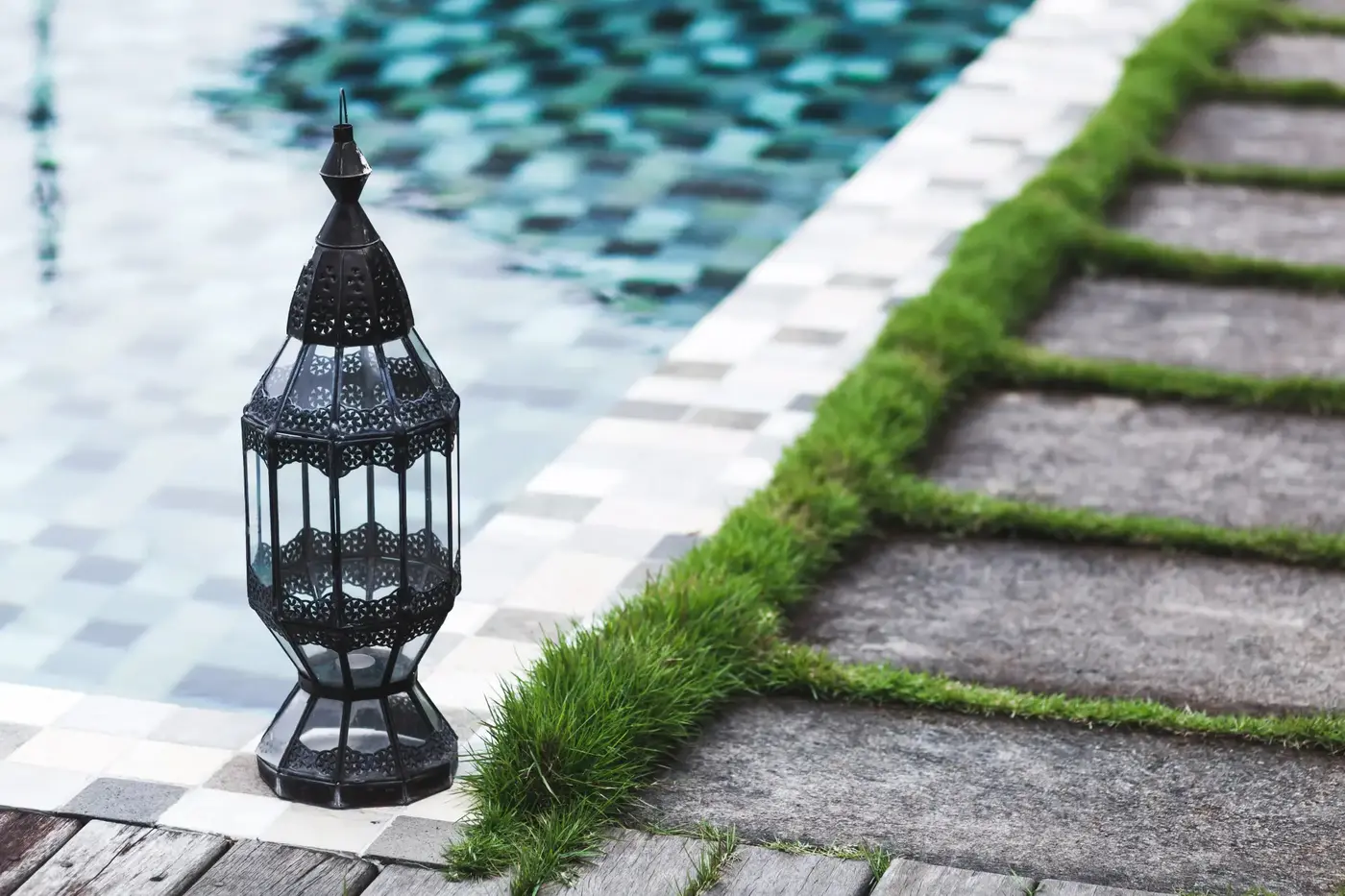
Close-up of a metal lantern on stone paver steps with grass joints next to a mosaic-tile pool
HOW A PROJECT RUNS

From Site Visit to Finished Interlock Patio

Eight stages, usually 2 to 8 working days on site depending on size. A repair or re-sand is often done in a day.

  1. 1

    Site visit and measuring

    We measure, read grades at doors with a laser level, and note downspouts, trees and gate width.

  2. 2

    Written quote and layout

    Your quote states dig depth, base thickness, lift size, bedding, paver line, edging and drainage. The outline is painted on the lawn.

  3. 3

    Locates and approvals

    Ontario One Call locates, a check for private lines such as irrigation, and any tree, ravine or grading rules.

  4. 4

    Excavation and haul-away

    Sod, topsoil and roots come out to depth, spoil is trucked away, and the subgrade is compacted and probed for soft spots.

  5. 5

    Base build

    Fabric over clay, then Granular A compacted in lifts of 4 inches or less, run past the finished edge and shaped to the fall.

  6. 6

    Laying, cutting and borders

    Bedding is screeded, pavers go down off a squared string line, and cuts are made wet or with dust extraction to control silica.

  7. 7

    Edging, compaction and joints

    Edging is spiked into the base, the field is plate compacted, and polymeric sand is swept in, compacted again and misted.

  8. 8

    Clean-up and walkthrough

    We clear residue, repair lawn edges and walk the finished surface with you.

Access drives the schedule as much as size. A gate about 5 feet wide lets a compact track loader carry soil and stone; narrower side yards mean a smaller machine or wheelbarrows and often an extra day. Base work runs from spring thaw until frost gets into the soil, so a winter site visit is the surest route to an early-season start.

2026 COST GUIDE

Interlock Installation Cost in Toronto and the GTA

New interlock runs $25 to $40 per square foot installed, with excavation, haul-away, base, edging and polymeric sand included. These are typical 2026 ranges in CAD before HST.

Interlock installation and repair cost ranges in Toronto and the GTA for 2026
Project Typical Size Installed Price Range
Front entry landing About 60 sq ft $1,800 to $3,200
Interlock walkway 4 ft x 30 ft (120 sq ft) $3,000 to $4,800
Interlock patio 200 sq ft $5,000 to $8,000
Interlock patio 350 sq ft $8,750 to $14,000
Pool deck or surround 600 sq ft $15,000 to $24,000
Large entertaining patio 800 sq ft $20,000 to $32,000
Precast or stone steps Per step, installed $450 to $1,100
Contrasting border or banding Per linear foot $15 to $30
Lift, re-level and reset existing interlock Per sq ft $8 to $16
Clean and re-sand with polymeric sand Per sq ft $2 to $4

What moves your number: the paver family (standard pavers sit low, porcelain, slabs and stone sit high), the cutting that curves and borders create, how far each load travels from the truck, and whether an old pad has to be broken out first. Small landings cost more per square foot because a crew, a machine and a load of base arrive either way.

Pricing a pool too? The backyard pool planner works out surround square footage from your traced yard. Prices are estimates for the GTA as of 2026; request a site visit for a written quote on your property.

AVOIDING CALLBACKS

Why Cheap Interlock Sinks, Grows Weeds and Heaves

Most interlock repair calls trace back to a few shortcuts that are invisible on handover day and obvious two winters later.

Common interlock failures, their causes and how Swimpool 360 prevents them
What you see What usually caused it How we prevent it
Dips and sinking One deep base layer compacted only on top, topsoil left in, or uncompacted trench backfill Topsoil out, thin compacted lifts, soft trenches bridged with clear stone
Weeds and ant hills Plain sand, half-full joints, or polymeric sand hosed out during activation Joints filled to just below the bevel, light misting, dry forecast
Winter heaving Water trapped over clay, a downspout emptying onto the patio, or a fall toward the house Fabric, a verified fall and downspouts rerouted before the base goes in
Spreading edges No edging, or spikes driven into loose bedding sand Base run past the edge so every spike bites compacted stone
Lips between slabs Large slabs on uneven or overly thick bedding Tighter screed, thinner bedding, mechanical lifters
White haze Polymeric dust left on the surface before wetting, or efflorescence from new concrete Surface blown clean before misting; efflorescence fades on its own

Already living with one of these? A dip by the back door or a weedy walkway rarely means starting over: we rebuild just the failed section of base and reuse the original pavers. Where a patio is pitched toward the house or the base has failed throughout, a rebuild is the honest call, and we will tell you which you have at the visit.

WORKMANSHIP STANDARDS

How Our Interlock Contractors Check Their Own Work

Good interlock contractors measure instead of eyeballing. Our crews aim to keep neighbouring pavers within about 3 mm in height and the surface within about 10 mm under a 3 metre straightedge, and the fall is read with a level at the house wall and the outer edge before any joint sand is opened. Joints stay in the 2 to 5 mm band polymeric sand makers call for.

You are welcome to inspect the dig and base before pavers cover them, against the depth and lift size printed in your quote. Warranty terms are written into that quote too, not promised at the door. First-season care notes: use a plastic shovel blade or raise the snowblower skids, and prefer calcium chloride to rock salt. On a big slab patio like this one, garden design and planting softens the stone.

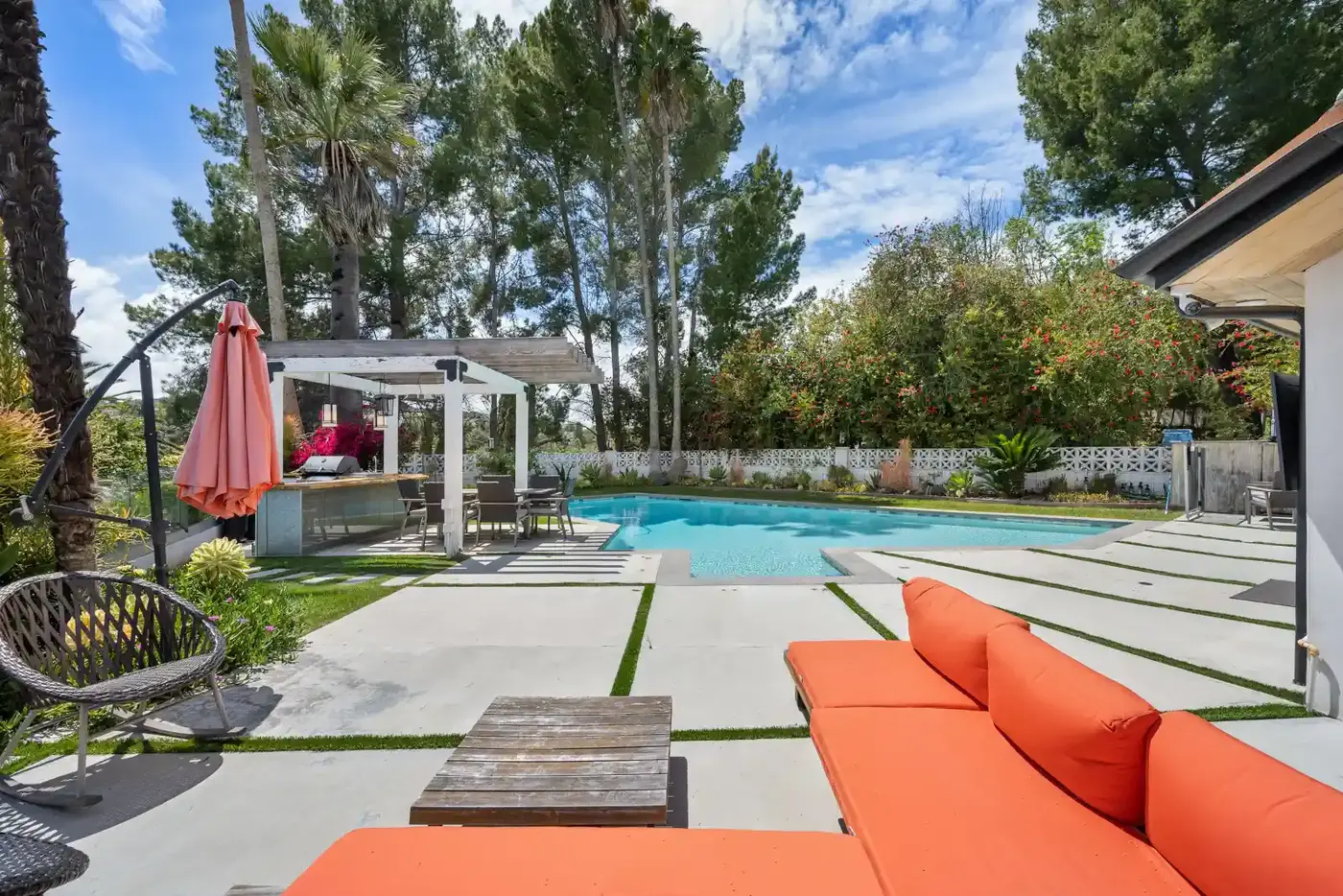
Large light stone slab patio with an orange lounge sofa, a hanging chair and an umbrella, with a pool behind

Get an Interlock Quote You Can Check

Excavation depth, base thickness, lift size, bedding and drainage, all in writing before work starts. Swimpool 360 builds interlock across Toronto, York Region and Durham.

LOCAL CONDITIONS

Interlock Toronto, York Region and Durham: What Changes From Town to Town

Clay lots versus moraine sand

Dense clay till under much of Toronto, Vaughan, Markham and Brampton holds water for days after a storm, so fabric and a full-depth base are non-negotiable there. The Oak Ridges Moraine gives King City, Aurora, Stouffville and Uxbridge sandier, faster-draining ground that loosens easily, so the subgrade is dampened before compacting.

Rules that can shape your layout

Toronto ravine lots, and lots near creeks or valleys regulated by the TRCA, Lake Simcoe Region or Central Lake Ontario conservation authorities, may need approval before grades change. Many zoning bylaws set a minimum share of front-yard soft landscaping, which limits walkway widening. We flag these at the visit; confirm current rules with your municipality.

Newer subdivisions and shared swales

Newer homes in Vaughan, Richmond Hill, Newmarket, Ajax and Whitby usually sit on an approved lot grading plan, with a rear or side swale carrying water for several houses. We set paving heights so that swale keeps working, because blocking it is a classic cause of wet basements and neighbour disputes.

Where our crews work

From Zephyr our crews cover Toronto, York Region and Durham, from Etobicoke to Oshawa and north to Newmarket and Uxbridge, with selected projects in Peel and Halton. The service areas page lists every community, and the gallery shows finished backyards.

FAQ

Interlock Installation FAQs

How much does interlock installation cost in Toronto?
In 2026 most GTA interlock work prices at $25 to $40 per square foot, with excavation, a compacted Granular A base, edging and polymeric sand included. Expect $5,000 to $8,000 for a 200 square foot patio and $15,000 to $24,000 for a 600 square foot pool surround; slabs, stone, curves and tight access push toward the top.
How long does an interlock patio take to install?
Once locates are back, a 200 to 400 square foot patio usually takes 2 to 4 working days: a day to dig and haul, a day for the base, and one or two to lay and sand. Areas over 600 square feet run 5 to 8 days.
Do I need a permit for interlock in Toronto or the GTA?
At-grade paving rarely triggers a building permit, yet several other rules can. Toronto protects private trees 30 cm or more in trunk diameter, and digging in their root zone can need a permit. Ravine bylaws, conservation authority regulated areas, front-yard soft landscaping limits and subdivision grading plans can also apply. We flag these at the visit; confirm current rules with your municipality.
Can sunken or weedy interlock be repaired instead of replaced?
Usually. If the pavers are sound, we lift the low area, rebuild the base in compacted lifts, reset the original units and re-sand, so the patch matches. A full rebuild makes sense when the whole base has failed or the surface slopes toward the house.
Can interlock be installed right up to a pool?
Yes, provided the pool backfill is properly compacted, the surface falls away from the water and a flexible joint separates pavers from coping. Beside a new pool we compact backfill in lifts or bridge settled trenches with clear stone before the base goes in. Light, textured pavers stay cooler and grippier underfoot.
Will polymeric sand stop weeds completely?
No, but correctly installed polymeric sand makes joints a poor home for weeds and ants. Most weeds in older interlock sprout in debris sitting on top of the joints or in plain sand that never bound. Filling to just below the bevel and sweeping now and then keeps weeds to an occasional pull.
GET STARTED

Request Your Interlock Installation Quote

Tell us the rough size, what the space is for and how we get into the yard. We will visit, measure and send a written quote with the full base spec.

647-239-7665
swimpool360@gmail.com