GARDEN DESIGN & PLANTING

Garden Design Toronto & GTA: Beds, Planting and Irrigation

Swimpool 360 plans and plants gardens built for real GTA conditions: heavy clay, winter road salt, hot poolside microclimates and a season that ends in a hard freeze. Our garden design service covers the whole job, from mapping the sun and soil on your lot to building the beds, choosing every plant, laying drip lines and guiding you through the first season of watering.

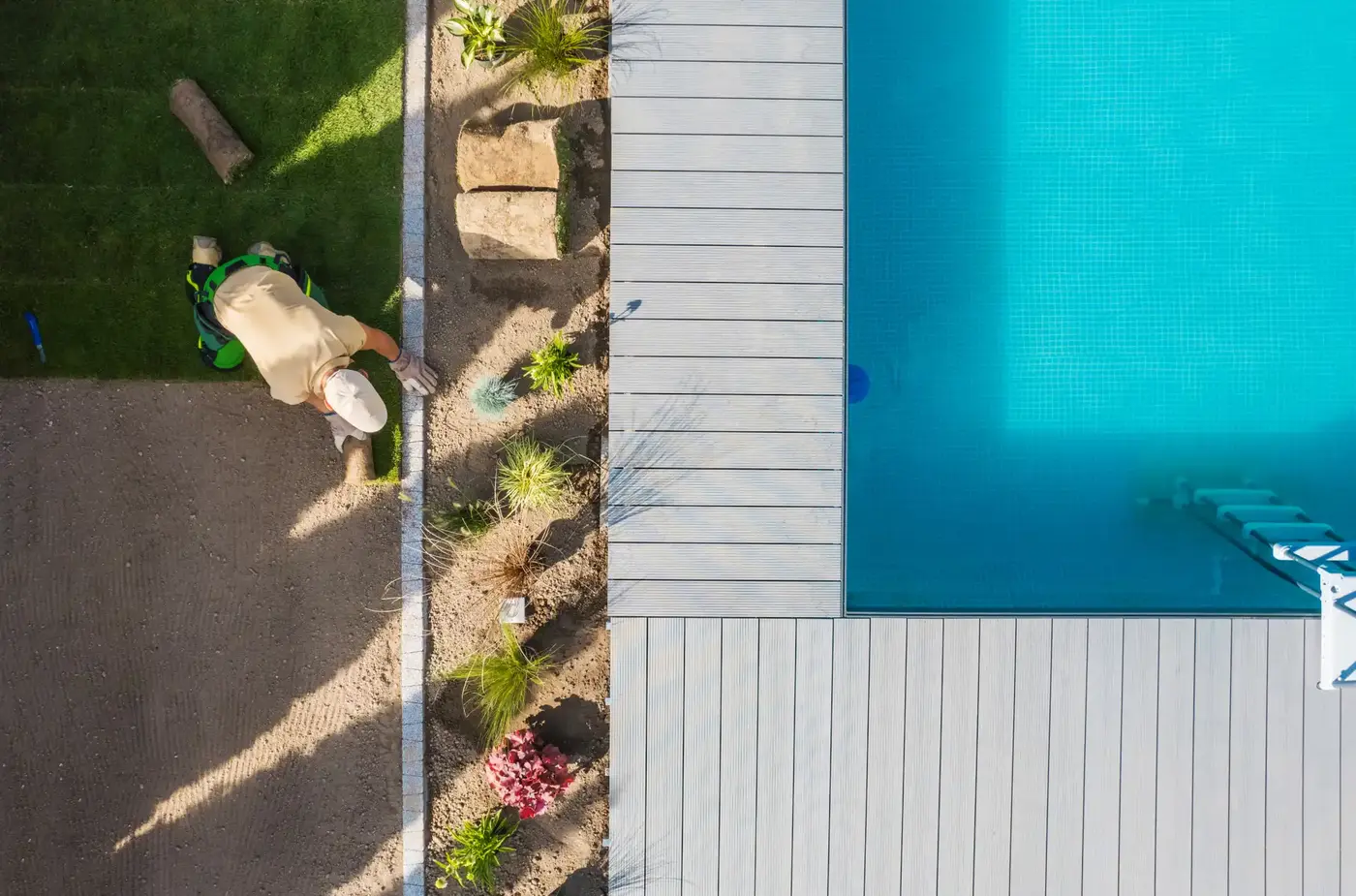
Garden design in progress - aerial view of a landscaper building a garden bed with rocks and plantings beside a grey deck and pool edge
SITE ANALYSIS

Garden Design Starts With a Site Analysis, Not a Plant List

In our experience, a struggling GTA garden usually has a soil or drainage problem rather than a plant problem. So the first visit records what your plants will actually face. We map sun and shade through the day (full sun means six or more hours of direct light, part shade three to six, shade under three) and note shadows cast by fences, the house and pool equipment. We trace where downspouts, sump outlets and surface runoff send water. A spade test tells us whether the ground is sticky clay till, the sandy loam common on the Oak Ridges Moraine, or builder's fill, and whether a filled test hole drains in hours or days.

We also confirm the hardiness zone, which runs roughly from 5b in the northern reaches of York Region and Durham to 6b near the Lake Ontario shore on the Natural Resources Canada hardiness map, and check for salt spray from roads and driveways. Much of the region's soil formed from limestone-rich glacial deposits and tests neutral to alkaline, which is why rhododendrons and blueberries often struggle without a specially built bed. Every garden landscaping job also gets Ontario One Call locates before digging, and where a large tree is close by we check the local tree by-law before working in its root zone.

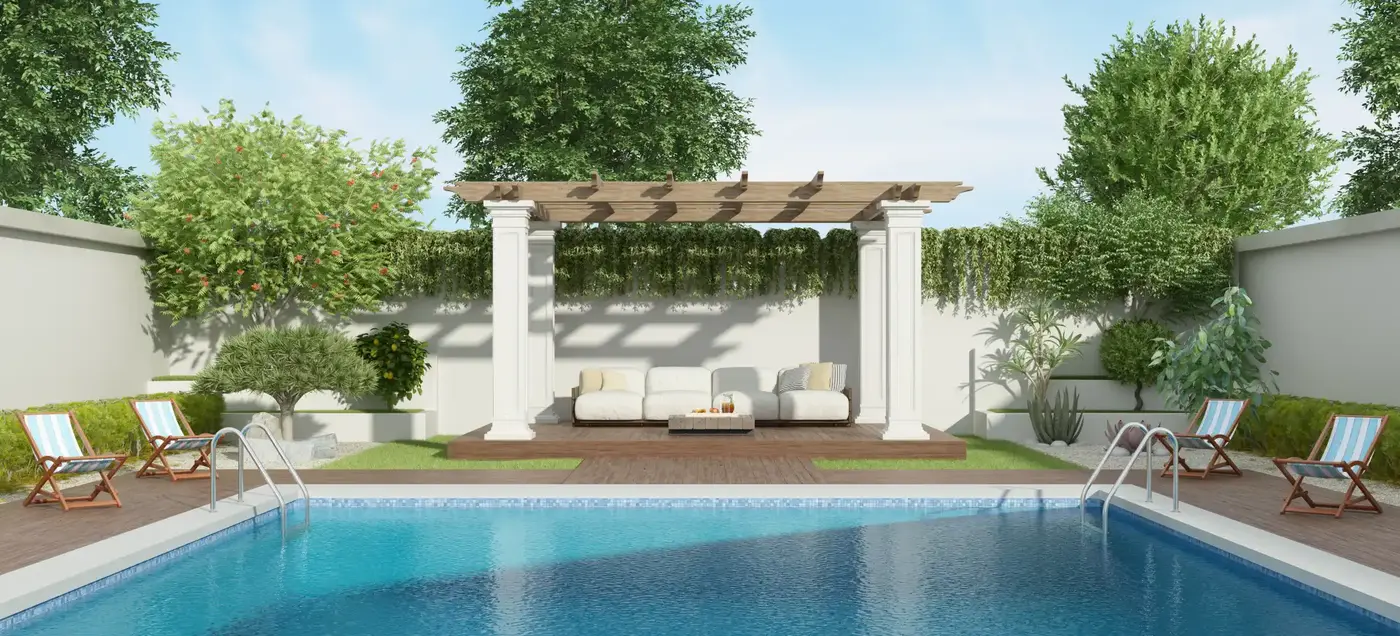
Wide rectangular pool in front of a white pergola with planters, shrubs and landscaped walls
WHAT WE DO

Garden Landscaping Services We Design and Install

Get Your Garden Designed Over the Winter

Late fall and winter are the ideal time to draw up a planting plan, so stock can be reserved and your beds go in during the first spring planting window.

HOW WE BUILD BEDS

Garden Bed Design and Construction for GTA Clay

Good garden bed design depends as much on construction as on layout. On heavy clay, the common shortcut of spreading 10 cm of triple mix over compacted subsoil creates a hidden basin: rain soaks through the loose layer, stops at the clay and sits around the roots every wet spring. We avoid that by stripping the sod, loosening the subsoil with a spade or tiller wherever tree roots allow, and blending compost and screened triple mix into the native soil to roughly 30 cm for perennials and 45 cm for shrubs. When a spot truly will not drain, we raise the bed or pick plants that tolerate wet roots instead of fighting the site.

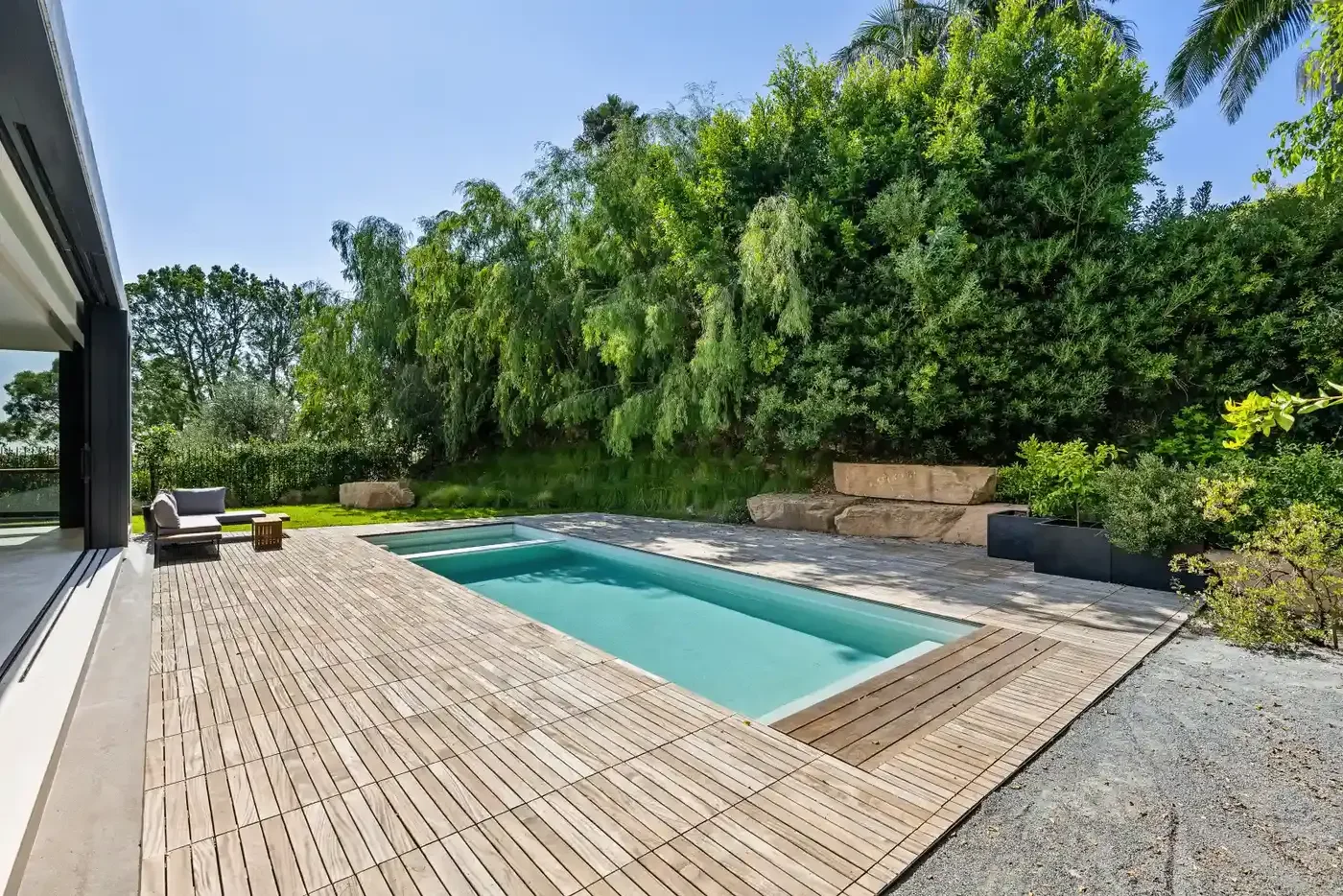
Edges are the detail people notice. We cut a clean spade edge for a natural look, or install steel edging that holds a crisp curve and does not heave the way thin plastic edging does after a few frost cycles. Beds that meet interlock walkways and patios are finished a little below the paver surface so soil and mulch stay put in a downpour. The top layer is 5 to 8 cm of shredded mulch, pulled back from stems and crowns to prevent rot and rodent chewing. Long raised planters, like those beside the deck in this photo, are built from cedar or segmental block with drainage at the base and filled with a lighter planting mix rather than dense garden soil.

Wooden deck beside a small pool with long raised planter beds and lush greenery along a hedge
PLANT SELECTION

Landscape Planting Palettes Matched to GTA Conditions

We build each planting list around the conditions found during the site analysis, then layer in the look you want. Ontario natives lead wherever they fit.

Sunny clay beds

Switchgrass, wild bergamot, New England aster, bluestar, black-eyed Susan, common ninebark and red osier dogwood all root happily into heavy, slow-draining soil once it has been loosened and enriched.

Dry, sandy moraine soil

Butterfly milkweed, prairie smoke, little bluestem, anise hyssop and bush honeysuckle prefer lean, fast-draining ground and sulk in rich, wet beds, so we add compost sparingly here.

Shade under mature trees

Pennsylvania sedge, wild ginger, foamflower, Christmas fern, Solomon's seal and pagoda dogwood cope with dry shade and root competition, planted in pockets rather than tilled across the root zone.

Road salt and driveway edges

Switchgrass, little bluestem, daylilies, creeping juniper and northern bayberry handle salt spray. We keep them in the first metre or two from the curb and leave a clear strip for snow piles.

Wet spots and rain gardens

Swamp milkweed, blue flag iris, Joe Pye weed, turtlehead and winterberry thrive where downspouts discharge. Rain gardens sit at least 3 metres from the foundation and drain within a day or two.

Four-season structure

Witch hazel flowers in late autumn, winterberry holds red fruit into January, red osier dogwood stems glow against snow, and grasses and seed heads stay standing until spring clean-up in April.

Flower Bed Design for Colour From May to October

Our flower bed design work starts with a bloom calendar, so something is always flowering and no month goes flat. A typical sunny GTA border might open with wild columbine, prairie smoke and ornamental alliums in May, move to foxglove beardtongue and salvia in June, wild bergamot and milkweed in July, Joe Pye weed and black-eyed Susan in August, and finish with asters and goldenrod in September and October.

Spring bulbs are tucked between perennials so their fading foliage is hidden by June.

Plants We Leave Out on Purpose

Some garden centre staples cause trouble here. Japanese barberry, burning bush, Norway maple, goutweed and periwinkle spread into ravines and woodlots, and the Ontario Invasive Plant Council publishes safer swaps for each. We also skip plants that need acidic soil on alkaline sites and anything rated colder than your zone can support.

Accent and container gardens follow the same logic. Planters on patios and by entrances use a free-draining potting mix, never garden soil, and pots that stay out all winter need frost-resistant material and plants rated at least two zones hardier than the yard, since roots in a pot freeze far harder than roots in the ground.

POOLSIDE PLANTING

Poolside Garden Design: Plants That Behave Near Water

Planting beside a pool is a different brief from planting a front yard. Heat reflected off coping and decking, chlorine or salt splash and constant bare-foot traffic all narrow the choices. We reserve the first metre beside the coping for tidy, low-litter plants such as prairie dropseed, coral bells, Russian cypress as a soft evergreen ground cover, compact panicle hydrangeas whose flower heads stay on the plant, and Japanese forest grass in shadier corners. Fruiting and seeding plants go well back: serviceberry and crabapple fruit stains decking, birch catkins and willow fluff clog skimmers, and thorny shrubs have no place near bare feet.

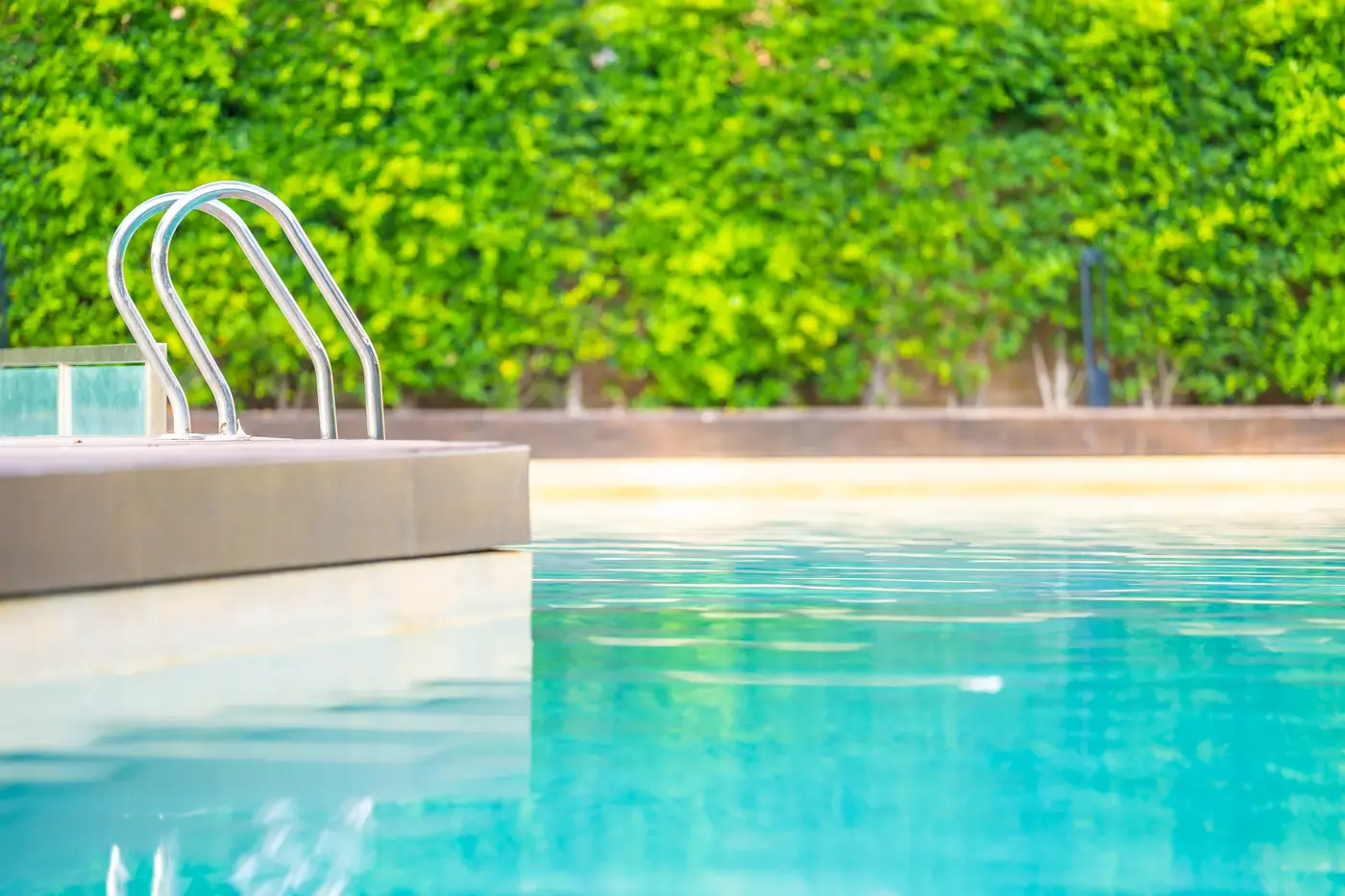
Timing helps as well. Most deciduous shrubs drop their leaves in October, after the majority of GTA pools have been closed, so midsummer shedding of petals, seeds and fluff matters more than autumn leaf fall. We put heavily visited bee plants a few metres from the steps and lounge chairs so the pollinator border still works without bees crowding swimmers. For green walls like the ivy-covered one shown here, a trellis or cable system lets vines such as native Virginia creeper or climbing hydrangea cover the wall without tendrils working into mortar or siding. Beds never drain toward the pool, and filter backwash is never routed into them. Evening use is easy to plan at the same time with our landscape lighting service.
Bright pool with a stainless steel ladder in front of a lush green ivy-covered wall
TIMING AND AFTERCARE

Ontario Planting Seasons and First-Year Care

How we schedule installs across the GTA, and what new plantings need afterward.

Spring

Late April to mid-June

We start once a squeezed handful of soil crumbles instead of forming a sticky ribbon. Working wet clay smears its structure for years. Spring suits warm-season grasses such as switchgrass and little bluestem.

Summer

Mid-June to August

Container-grown stock can still go in, but only with daily watering at first and ideally drip already running.

Fall

Late August to mid-October

Warm soil and cool air push root growth, making this the best window for most shrubs and perennials. Evergreens go in by the end of September; tulips, daffodils and alliums follow in October.

Late fall and winter

November to March

Planning season. We measure, design and reserve plants while growers have the widest selection, then book your install for the first workable spring weeks.

First-Season Watering Guide

Plant Type Weeks 1 to 2 Weeks 3 to 8 Rest of First Season
Perennials and grasses Every 1 to 2 days 2 to 3 times a week Weekly in dry spells
Deciduous shrubs 2 to 3 deep soaks a week Twice a week Weekly deep soak, about 2.5 cm of water
Evergreens 2 to 3 deep soaks a week Twice a week Weekly, plus a deep soak in late October before freeze-up
Fall-planted bulbs Once, at planting Only if autumn is unusually dry None until spring growth

Before each watering, test the soil with a finger to the second knuckle, about 5 cm; damp means skip a day. On clay, waterlogged roots kill more new plants than dry spells do, and a drip zone set to this schedule is stepped back as the season goes on. Several York Region and Durham municipalities set odd and even outdoor watering days in summer, and a timer makes it easy to comply. If your quote includes plant replacement coverage, its terms are written into the quote and assume this schedule is followed.

COST GUIDE

Garden Design and Planting Cost in Toronto and the GTA

Typical 2026 installed price ranges in Canadian dollars. Plant size has a big effect: a #1 perennial costs far less than a #3, and a #7 shrub looks finished on day one where a #2 takes a few seasons to fill in.

Service Typical Scope 2026 Price Range
Site analysis and garden design plan Site visit, scaled plan, plant list, bloom calendar $400 to $1,800
New planted garden bed Soil preparation, edging, plants and mulch $18 to $35 per sq ft
Foundation or front-yard bed makeover 150 to 300 sq ft, old shrubs removed $3,500 to $9,000
Poolside planting beds Low-litter palette, edging, mulch or stone $4,000 to $12,000
Planting restoration after a pool build Grading, sod and planting beds $3,000 to $15,000
Raised planter bed Cedar or block, drained and filled $1,500 to $5,000 each
Steel landscape edging Supplied and installed $10 to $18 per linear ft
Drip irrigation for beds 1 to 3 zones, controller, backflow protection $1,500 to $4,500
Container garden set 3 to 5 planters with soil and plants $600 to $2,500
Mulch top-up Shredded mulch supplied and spread $110 to $160 per cubic yard

Estimates only. Backyards with no side access, soil that must be hauled away, and large specimen plants push prices toward the top of each range. We price every bed line by line, so request a written estimate based on your own site.

THE PROCESS

From First Visit to Planted Beds: Our Garden Design Process

In peak season, most projects move from the first visit to finished beds in three to six weeks. A single bed takes one to two days to install, a front-yard makeover two to four days and a full backyard one to two weeks.

  1. 1

    Site visit and analysis

    1 visit

    Sun, soil, drainage, salt exposure and protected trees, plus how you want to use the space.

  2. 2

    Design plan and revisions

    1 to 3 weeks

    Your scaled planting plan, plant list and construction specs, adjusted until it fits.

  3. 3

    Locates and plant ordering

    1 to 2 weeks

    Utility locates are booked and plants reserved so the specified sizes arrive on install day.

  4. 4

    Bed preparation

    Day 1 of the install

    Sod stripped, subsoil loosened, amendments blended in, grades set and edging installed.

  5. 5

    Planting, mulch and irrigation

    1 to 5 days

    Plants placed, adjusted on site, watered in, mulched and hooked to drip lines.

  6. 6

    Establishment walkthrough

    Final day

    The watering schedule, reading soil moisture and what normal transplant stress looks like.

LOCAL CONDITIONS

Garden Design Across Toronto, York Region and Durham

Established Toronto neighbourhoods

Older streets in Leaside, the Beaches, Riverdale and around High Park often sit under mature maples and oaks, so shade gardens and root competition are the norm. The City's private tree rules cover trunks of 30 cm diameter and up, ravine-edge lots can fall under the Ravine and Natural Feature Protection By-law, and boulevard gardens must follow City rules. Confirm current rules with the City before work starts.

Newer subdivisions

In newer parts of Vaughan, Markham, Richmond Hill, Whitby, Ajax and Oshawa, builders often leave a thin skim of topsoil over clay compacted by heavy equipment. Their engineered swales must keep working, so beds follow the approved drainage pattern rather than blocking it.

Oak Ridges Moraine and rural lots

Around Aurora, King, Stouffville and Uxbridge, sandy moraine soil drains quickly and sits in a colder zone, so new plantings need extra compost and water. On larger lots near our Zephyr base and toward Port Perry, deer and rabbits browse heavily. Aromatic plants such as mountain mint, bergamot and catmint, plus ferns and ornamental onions, are bothered less, though no plant is fully deer-proof.

One crew for pool, stone and planting

Swimpool 360 has built pools and landscapes since 2010, and planting is scheduled after the heavy machines leave so new beds are never re-compacted. On combined projects we lay sleeves under walkways before paving, so drip lines and lighting cable can reach the beds later. Sloped yards can be terraced with our retaining wall service, and if screening is the goal, our privacy screening page covers hedges and privacy trees.

Plan a Garden That Thrives in Your Soil

Tell us about your yard and we will map the sun, soil and drainage, then design beds and plantings that suit the way you live outside.

FAQ

Garden Design and Planting FAQs

How much does garden design cost in Toronto and the GTA?
In 2026, a site analysis and scaled planting plan typically runs $400 to $1,800. Installed beds usually cost $18 to $35 per square foot including soil preparation, edging, plants and mulch, and a 150 to 300 square foot front-yard makeover is commonly $3,500 to $9,000.
When is the best time to plant a new garden in Ontario?
Spring, from roughly late April to mid-June once the soil stops being saturated, and fall, from late August to mid-October while the soil is still warm. Evergreens should be in by the end of September, and spring bulbs go in during October.
Do I need to replace my clay soil before planting?
Usually not. A thin layer of triple mix over compacted clay can trap water where the layers meet. We loosen the subsoil and blend compost and triple mix into it, about 30 cm deep for perennials and 45 cm for shrubs, or raise the bed where drainage is very poor.
How often should new plants be watered after installation?
Perennials need water every one to two days for the first two weeks and shrubs need two to three deep soaks a week, tapering to a weekly soak of about 2.5 cm in dry spells by midsummer. Check the soil first, because on clay overwatering is the more common killer.
Can a pollinator garden work next to a swimming pool?
Yes, with some separation. Tidy, low-litter plants go beside the coping, while heavily visited bee plants sit a few metres back from the steps and lounge area. Beds are graded so soil and mulch never wash toward the pool.
Do I need a permit for garden landscaping in the GTA?
A garden bed on private land seldom triggers a building permit, yet other rules still matter: Ontario One Call locates before digging, private tree by-laws that protect larger trees and their roots, boulevard planting rules, and conservation authority limits near ravines or watercourses. Confirm details with your municipality.

Book Your Garden Design Consultation

From the first soil test to the last layer of mulch, one Swimpool 360 crew handles your garden. Phone 647-239-7665 or send a few details about the yard.

GET STARTED

Request Your Garden Design Quote

Share a few details about your yard, such as its size, how much sun it gets and what is growing there now, and we will arrange a site visit to start your planting plan.

647-239-7665
swimpool360@gmail.com