PRIVACY SCREENING

Privacy Screening Toronto & GTA

Swimpool 360 plans and installs privacy screening for GTA backyards and pool areas: cedar hedges planted in a proper trench, narrow privacy trees for tight lots, and built screens that block a neighbour's window on day one. Because we also build pools, every screen is laid out around your enclosure, plumbing and equipment, not on top of them.

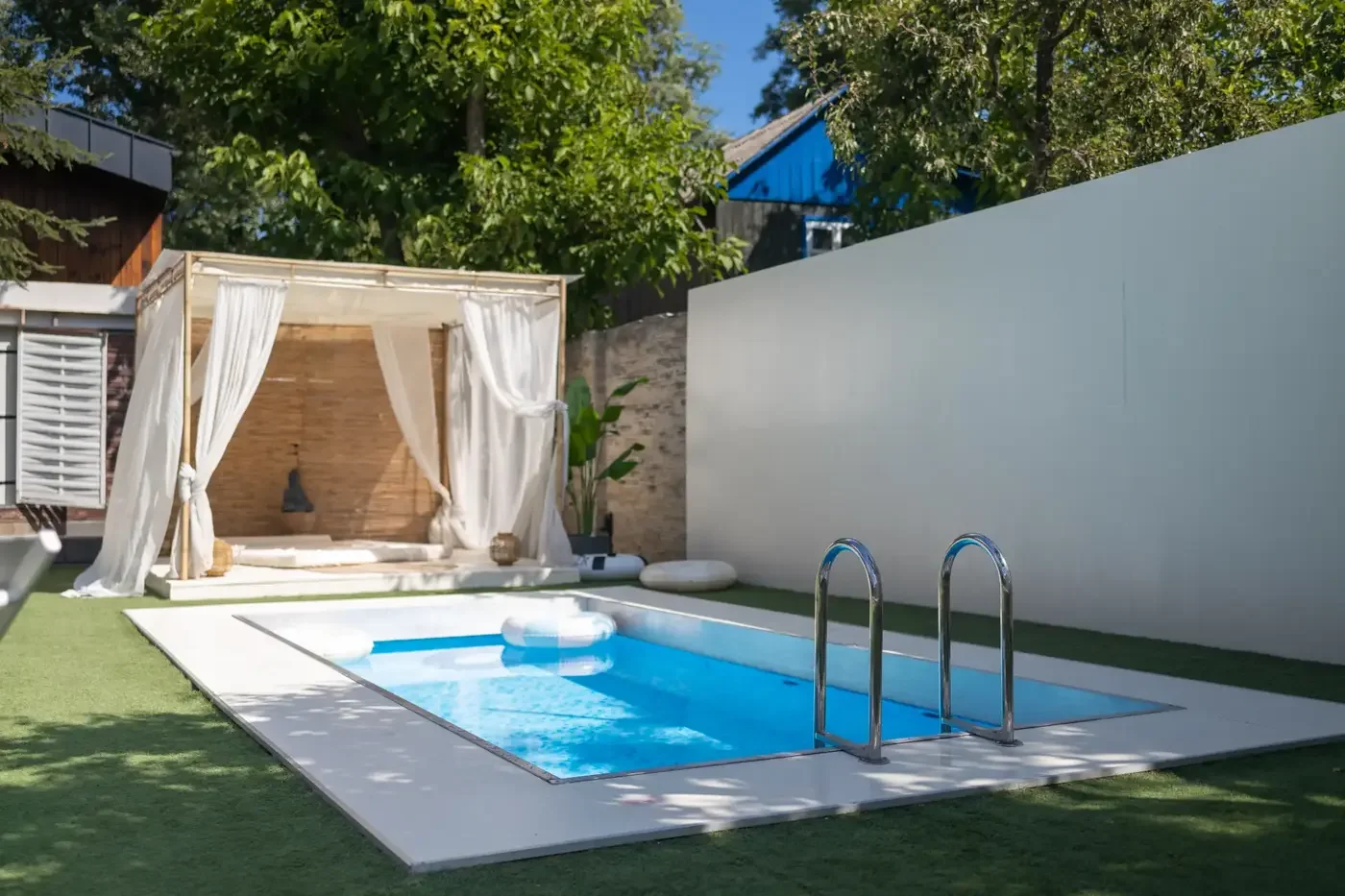
Privacy screening around a small pool with stainless steps in a compact backyard, with a white fabric cabana, a tall white privacy wall and artificial turf
START WITH THE SIGHTLINE

Privacy Screening That Blocks the Right View

Most screening disappoints for one reason: it was planted along the lot line at whatever height the garden centre had in stock, while the view that bothers you comes from a second-storey window two houses over. Before we price anything, we sit in your lounge chair, stand on your pool deck and look back at every window that can see you. Then we work out the height and position that actually closes those lines.

The geometry is simple and it saves money. A 6 foot screen placed close to where you sit can hide more than an 8 foot hedge at the back fence, because the closer the barrier is to your eye, the larger the slice of sky and window it covers. On a narrow Toronto or Vaughan lot that often means a short run of tall plants or a single built panel beside the seating area, rather than 120 feet of hedge around the whole yard. Sometimes the right answer is both: a fast built screen where you need privacy now, and a privacy hedge along the perimeter that grows into the job.

CEDAR HEDGES

Cedar Hedge Planting: Emerald, Brandon or White Cedar

A cedar hedge is still the most popular living screen in Ontario, but the three cedars sold here behave very differently. Emerald is narrow, stays bright green through winter and suits tight side yards, but it grows slowly and heavy snow can split its tops open. Brandon is wider, darker and faster, takes shearing well and holds up better under snow, so it suits longer runs where you have 5 to 6 feet of width to give. Native white cedar is the budget choice: it is sold smaller, grows quickly, shrugs off wet clay and needs to be sheared once or twice a year to stay dense. It also bronzes in winter, which some owners dislike.

Our cedar hedge planting method is a continuous trench rather than individual holes. The trench is as deep as the root balls and about twice as wide, so roots move sideways into loosened soil instead of circling in a clay pot. In heavy GTA clay we set the top of each root ball 1 to 2 inches above grade and blend in triple mix so water does not pool around the roots. A 4 to 5 foot cedar typically arrives with a 14 to 18 inch root ball; 6 to 7 foot stock usually comes in a 20 to 24 inch wire basket, which we cut back at the top so it never girdles the trunk. Every hedge goes in with a soaker line and 2 to 3 inches of shredded bark mulch kept clear of the stems.

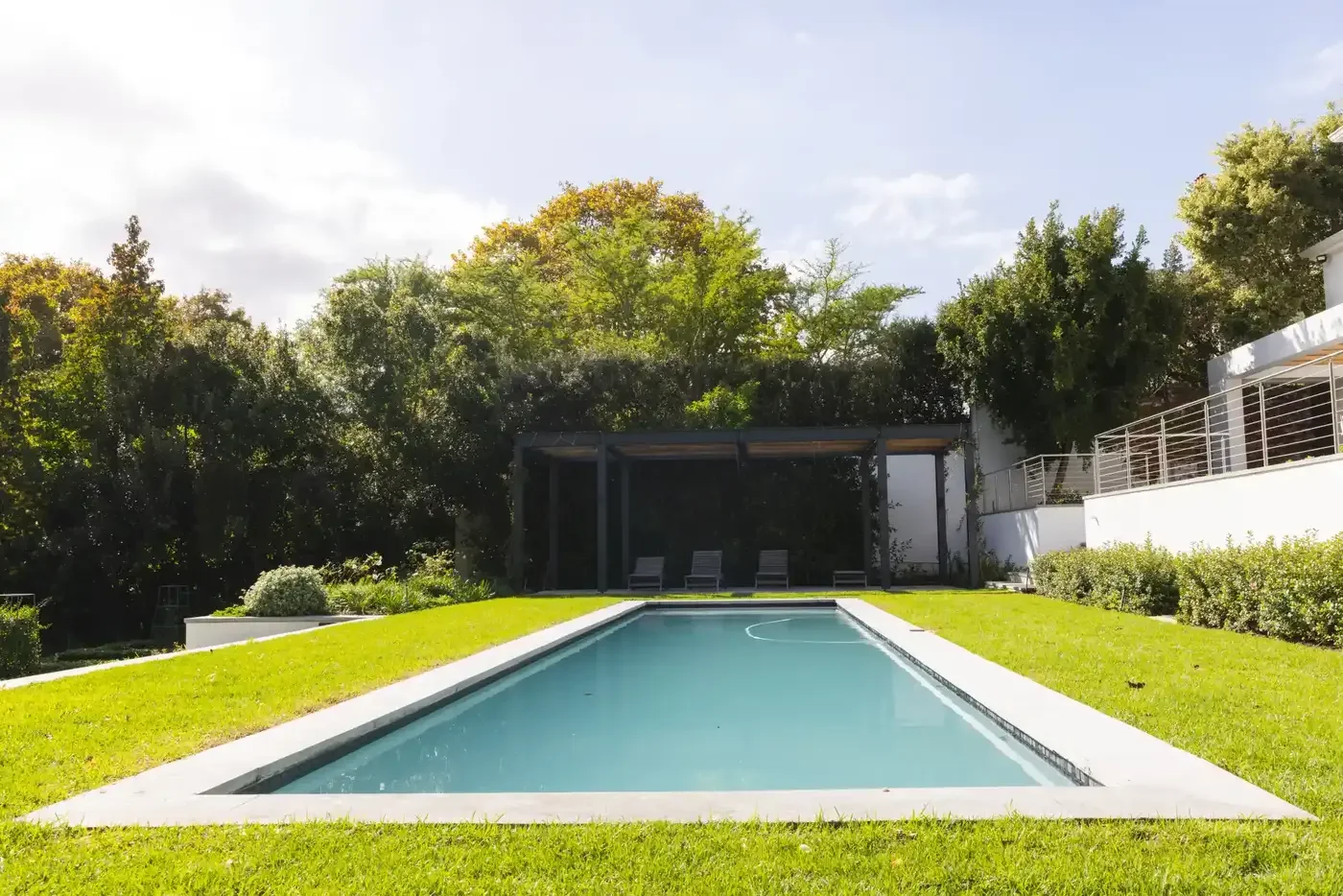
Long lap pool set in a lawn with a pergola at the far end and dense trees and hedging around the yard
FIRST YEAR

Fall vs Spring Planting and the First-Year Watering Plan

New evergreens rarely die from cold. They die from drying out, either in their first summer or over their first winter. Timing and watering decide whether a new hedge thrives.

Fall planting (mid September to late October)

Warm soil keeps roots growing for weeks after the tops have stopped, and cool nights cut water loss. This is why searches for cedar hedge planting spike in October and November. The catch is the deadline: the hedge needs about six weeks of root growth before the ground locks up, so we stop planting cedars by early November. Fall hedges get a deep soak right before freeze-up and burlap screens on the side facing a salted road or open wind.

Spring planting (April to early June)

Spring stock is fresh and you get a full growing season, so it suits homeowners who want the hedge established before a summer pool opening. The risk is July: a hedge with a small root system meets the hottest, driest weeks of the year. Spring jobs need a stricter watering routine and benefit from a timer on the soaker line. We avoid planting from mid July to late August unless the client can water daily.

The watering schedule we leave with every hedge

  • Weeks 1 and 2: a slow, deep soak every day or two, enough to wet the full depth of the root ball.
  • Rest of the first summer: two or three deep waterings a week, more during heat waves, less after heavy rain.
  • Fall: once a week until the ground freezes, finishing with a heavy soak in late November.
  • Second summer: weekly in dry spells. Roots are still establishing and drought shows up as brown patches the following spring.
  • Clay caution: push a trowel 10 cm into the soil before watering. If it comes up wet and sticky, skip a day. Waterlogged clay drowns cedar roots as surely as drought.
COLUMNAR PRIVACY TREES

Privacy Trees for Tight GTA Lots

Where a hedge would eat too much of a narrow lot, upright privacy trees do the job in a fraction of the width. Emerald cedar, Sky Pencil holly and columnar crabapple are the familiar picks, but they are not the only ones that survive a GTA winter. Columnar hornbeam is one of the toughest trees we plant: it handles clay, compaction and hard pruning, and can be clipped into a tall green wall, although it is bare from late fall to spring. Swiss stone pine gives soft, dense evergreen cover and is hardy far north of Toronto, but it is slow, expensive at larger sizes and needs well drained soil, so it suits the sandier Oak Ridges Moraine yards in King, Aurora and Uxbridge better than wet clay in Brampton.

Skyrocket juniper is the slimmest evergreen we install, only 2 to 3 feet wide, yet ice storms can pull it open and it carries cedar-apple rust, so we never pair it with crabapples or apple trees. Upright yews such as Hicks and Hill are the only good choice for a fully shaded side yard, but every part except the red flesh of the berry is toxic, which matters if you have dogs or toddlers. We put these trade-offs on the table before you buy, along with the mature width, because a tree that outgrows a 6 foot side yard becomes a pruning problem in ten years.

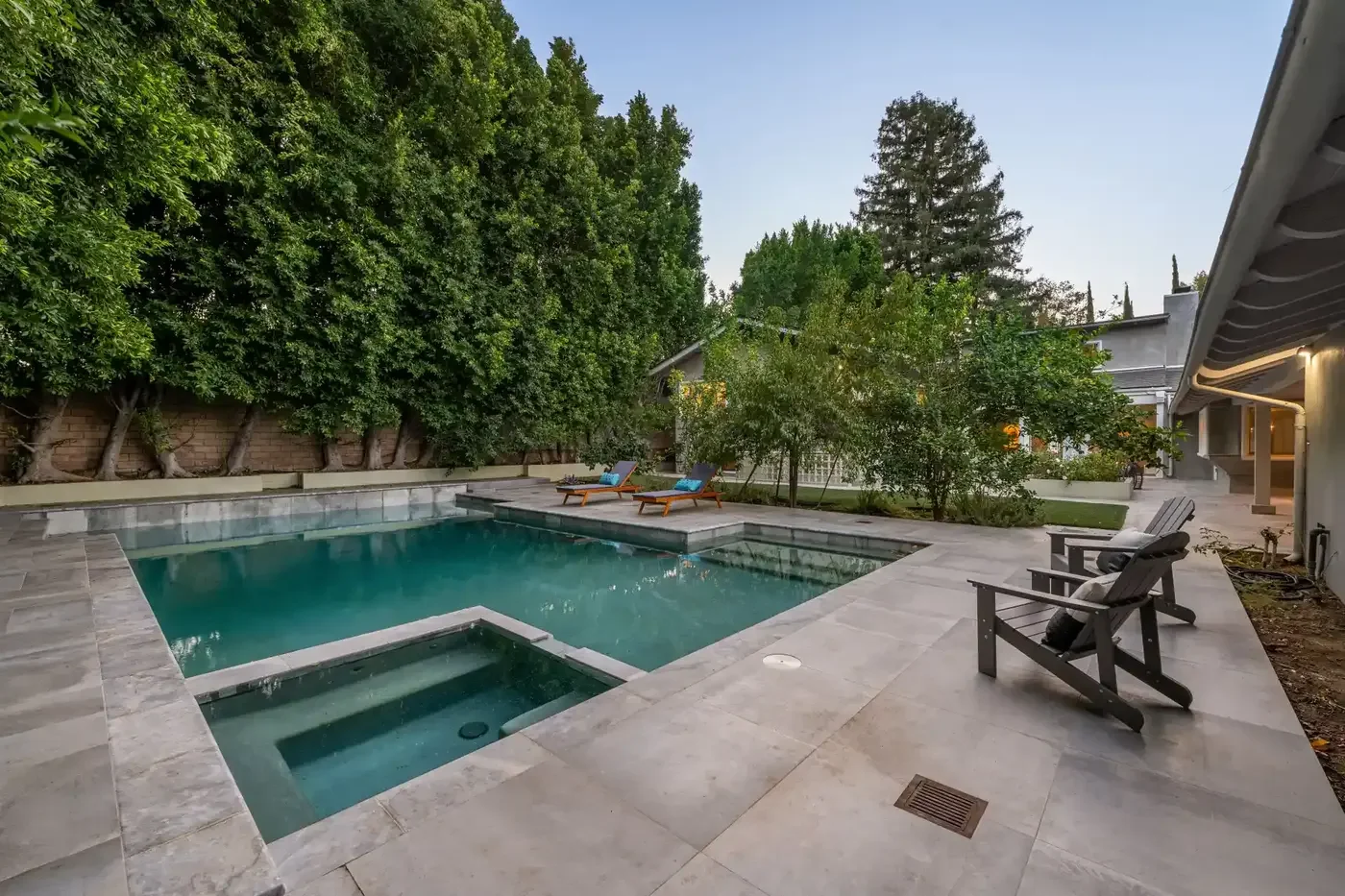
Stone patio around a pool and spa with Adirondack chairs and a tall dense cedar hedge along the back
SPECIES COMPARISON

Fast Growing Privacy Trees and Narrow Evergreens Compared

Approximate mature widths and typical growth once established in GTA conditions. Hardiness ratings are Canadian plant hardiness zones; most of the GTA falls in zones 5 and 6.

Tree Mature Width Growth Light Hardy To Honest Notes
Emerald cedar (Thuja 'Smaragd') 3 to 4 ft 6 to 12 in/yr Full sun to part shade Zone 3 Holds bright green colour in winter; heavy snow can splay the tops, so tie in young plants.
Columnar hornbeam (Carpinus 'Frans Fontaine') 8 to 12 ft 12 to 18 in/yr Sun to part shade Zone 4 Tolerates clay and hard pruning; deciduous, so screening drops off from November to April.
Swiss stone pine (Pinus cembra) 6 to 10 ft 6 to 12 in/yr Full sun Zone 3 Soft, dense blue-green needles and very cold hardy; slow and costly, and it sulks in wet clay.
Skyrocket juniper (Juniperus 'Skyrocket') 2 to 3 ft 6 to 12 in/yr Full sun only Zone 4 The narrowest option here; ice can pull it open, and it hosts cedar-apple rust, so keep it away from crabapples.
Upright yew (Taxus 'Hicksii' or 'Hillii') 4 to 6 ft 6 to 12 in/yr Full sun to full shade Zone 4 Best evergreen for shady side yards; foliage and seeds are toxic to pets and children, and deer browse it.
Columnar Norway spruce ('Cupressina') 4 to 6 ft 8 to 12 in/yr Full sun Zone 3 Stiff, upright and wind tolerant; prickly, so keep it back from walkways and pool edges.

A mixed screening border often beats a single-species row. Layering a few evergreens for winter structure with upright hornbeams, ninebark or tall grasses in front gives you screening at several heights, softens the wall effect and means one pest or disease cannot wipe out the whole run. If you want the border to read as part of a wider planting plan, our garden design and planting team handles the beds and seasonal colour around it.

Find Out What Your Yard Needs to Feel Private

Book a sightline visit. We show you where a hedge, a row of narrow trees or a built panel will do the most work, with costs for each option.

BUILT PRIVACY

Built Screens and Backyard Privacy Ideas That Work on Day One

Plants take seasons; carpentry takes days. Our built screens are the fastest backyard privacy ideas to put in place, and they work where roots cannot go, such as on top of interlock, beside a pool deck or on a rooftop. Cedar privacy panels with horizontal boards are the classic option and can be stained to match a deck. Composite or aluminium-framed slat screens cost more up front but do not need staining and will not twist. We leave a small gap between slats on tall panels: you still cannot see through at an angle, but wind passes through instead of treating a solid 6 foot wall like a sail.

A pergola solves the overhead view that no fence can, and adds shade over a lounge or outdoor kitchen. Adjustable aluminium louvres let you open the roof to the sun or close it against a neighbour's upper window, while outdoor curtains in solution-dyed acrylic pull across for evening privacy and tie back by day. For renters, condo townhouses or spots over buried pool lines, planter boxes with trellis screens give a movable living wall. Posts for every freestanding screen and pergola sit on footings below the GTA frost line, roughly 4 feet down, or on helical piles, so they stay plumb after a few winters. Building the screen into a new deck? Weigh the board options in our composite and wood decking price breakdown.

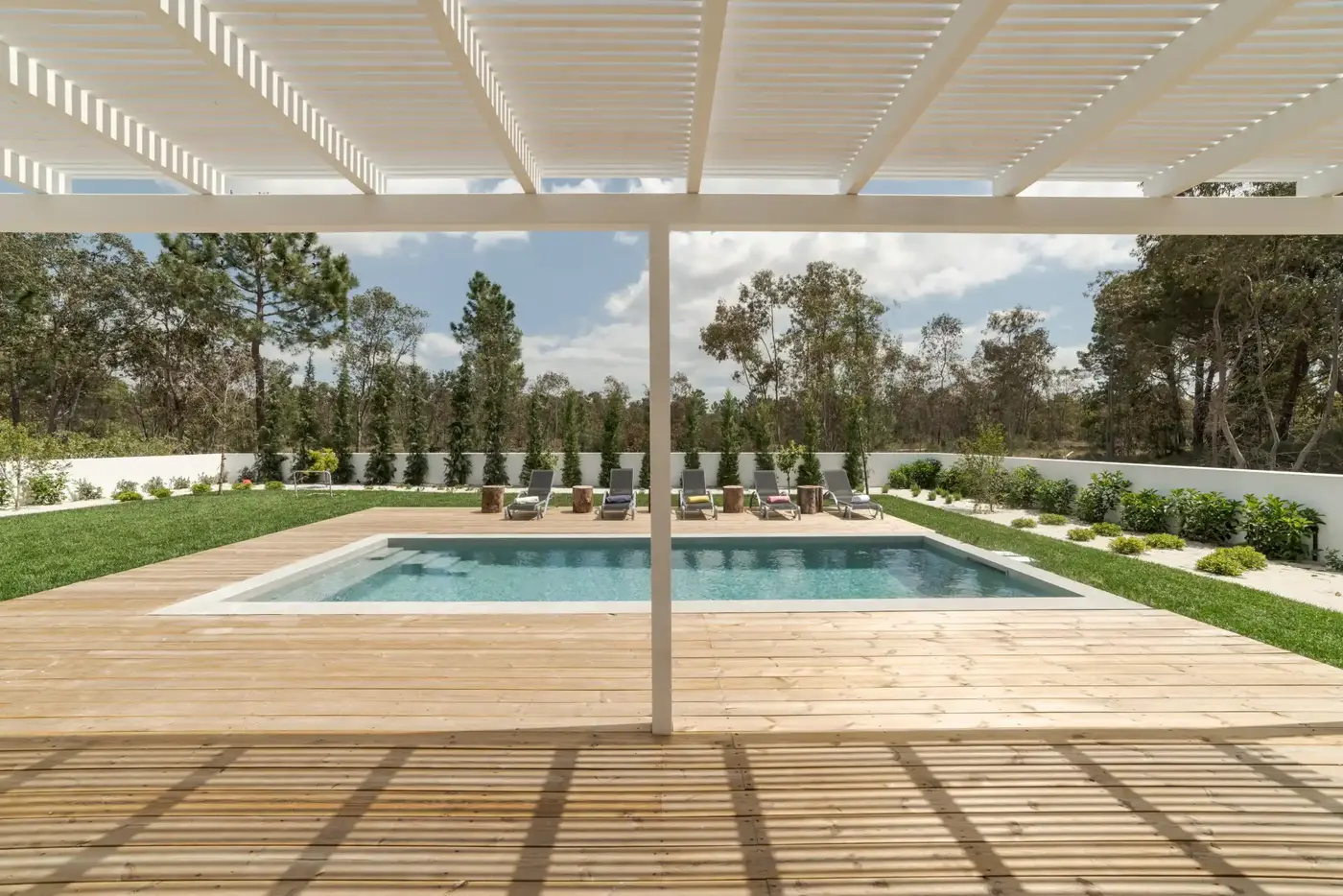
Wide wooden deck under a white pergola beside a rectangular pool, with lawn and trees
POOL AREAS AND BYLAWS

Pool-Area Privacy Screening: What to Plan Around

A screen is never the pool enclosure. However dense a hedge becomes, it does not replace the compliant fence and self-closing, self-latching gates your municipality requires around a pool. We design screening to sit beside or behind that enclosure. We also keep planters, benches and horizontal rails away from the outside of the pool fence, because many bylaws treat anything a child could climb near the barrier as a violation. Our guide to Ontario pool fence rules covers the enclosure itself.

Height and placement rules vary by town. Rear yard fence and screen limits in many GTA municipalities sit around 2 metres, front yards are lower, and corner lots have sightline triangles where tall hedges and screens are restricted. Large or roofed pergolas may need a permit or setbacks. Removing an existing large tree to make room can also need approval; Toronto, for example, regulates the removal of private trees above a set trunk diameter. Check your own bylaw, and we verify the limits for your address before we draw the plan.

Keep plants out of the splash zone. Cedars browned by chlorinated splash and backwash are a common sight. We set hedges at least 3 to 4 feet back from coping, keep tree canopies from overhanging the water so the skimmer is not full of needles and leaves, and avoid aggressive rooters such as willows, poplars and silver maples near the pool shell, drains and buried lines. We also plant fully on your side of the property line, offset by half the mature width plus a working strip, so you can trim both faces without stepping onto a neighbour's lawn.
TIME TO PRIVACY

How Long Until a Privacy Hedge Actually Screens?

Day one

Cedar, composite or aluminium screens, pergola curtains and screened planters.

1 to 3 seasons

6 to 7 foot Emerald or Brandon cedars: tall enough at planting, with the gaps between plants knitting together.

2 to 4 years

4 to 5 foot white or Brandon cedars, sheared each year to thicken the base.

3 to 5+ years

Small Emerald cedars, Swiss stone pine and yews. Worth it for the long term, not for next summer.

THE PROCESS

How We Plan and Install Your Privacy Screen

A typical 60 to 100 foot cedar hedge is planted in one or two days. Built screens take two to five days, and pergolas up to a week, depending on footings and finishes.

  1. 1

    Sightline survey

    We stand where you actually sit, swim and eat, and map exactly which windows, decks and second-storey views need blocking, so the screen goes where it does the most work.

  2. 2

    Locates and layout

    We request free utility locates through Ontario One Call, check bylaw limits, then string-line the hedge or screen with an offset from the property line that leaves room for mature growth.

  3. 3

    Plant and material selection

    We match species to sun, soil and space, hand-pick cedars and trees for full colour and sound root balls, and order panels or pergola components for built screens.

  4. 4

    Trench, soil and footings

    We dig a continuous planting trench and improve heavy clay, or set screen and pergola posts on frost-depth footings so they stay plumb through freeze-thaw cycles.

  5. 5

    Planting and install

    Plants are set at the correct height, burlap and wire are opened, the trench is backfilled and watered in, and a soaker line and mulch are added. Built screens are assembled and levelled.

  6. 6

    First-year aftercare plan

    You receive a written watering schedule, winter protection steps and a spring check visit, when we confirm every plant has rooted and flag any that need attention before the summer heat.

COST GUIDE

Privacy Screening Cost in the GTA (2026)

Installed price ranges in Canadian dollars. Hedge prices include trenching, soil amendment, planting, mulch and initial watering. Screens and pergolas include footings and hardware.

Screen Type Size / Spec Installed Price Range
Native white cedar hedge 4 to 5 ft, 18 to 24 in spacing $25 to $45 per linear ft
Brandon cedar hedge 5 to 6 ft, 3 ft spacing $50 to $85 per linear ft
Emerald cedar hedge 4 to 5 ft, 24 to 30 in spacing $55 to $80 per linear ft
Emerald cedar hedge 6 to 7 ft, 30 in spacing $100 to $160 per linear ft
Columnar privacy tree 6 to 8 ft (hornbeam, juniper, yew) $300 to $700 per tree
Specimen privacy tree 8 to 12 ft, machine planted $700 to $1,500 per tree
Cedar privacy panel 6 ft high x 8 ft section, frost footings $700 to $1,300 per panel
Composite or aluminium slat screen 6 ft high x 8 ft section $1,000 to $1,800 per panel
Planter box with trellis screen Cedar or composite, planted $900 to $2,200 each
Wood pergola with privacy curtains Approx. 10 x 12 ft $7,000 to $14,000
Aluminium louvred pergola Approx. 10 x 12 ft $12,000 to $25,000
Old hedge removal Cut, haul and stump grind $15 to $40 per linear ft

Estimates for the GTA market in 2026. What moves the price: plant size and variety, backyard access for root balls and machines, clay that must be removed rather than amended, and the finish level on built screens. Ask for an exact price for your yard.

Fall Is Prime Time for a New Cedar Hedge

Cedars planted before early November root in while the soil is warm and are ready to push new growth in spring. Ask about this season's planting dates.

LONG-TERM CARE

Keeping a Cedar Hedge Dense for Decades

  • Shape it narrower at the top. A hedge trimmed slightly wider at the base than at the top lets light reach the lower branches. Flat-sided or top-heavy hedges go bare at the bottom, which is exactly where you need privacy.
  • Never cut into brown wood. Cedars do not sprout from bare interior stems, so a hard cut to fix an overgrown hedge leaves permanent holes. We trim after the spring flush in June and, for fast varieties, lightly again in late summer.
  • Expect some fall browning inside. In September and October cedars shed their oldest interior foliage. It looks alarming but is normal; browning on the outer tips is the warning sign.
  • Protect against winter and salt. Spiral-tie young Emerald cedars with soft jute so snow cannot splay them, brush off heavy wet snow gently, and use freestanding burlap screens rather than tight wraps on the side facing road salt or open wind.
  • Watch for deer and mites. On rural edges of York Region and Durham, deer browse cedars and yews hard in late winter. In hot, dry summers, spider mites cause dull, speckled foliage. Both are manageable if caught early.
  • Feed lightly, if at all. A thin layer of compost each spring is usually enough. Heavy fertilizer pushes soft growth that suffers more winter burn.
WHY SWIMPOOL 360

Privacy Screening From a Team That Builds Pools

A landscaper who has never built a pool can plant a beautiful hedge directly over the return line or tight against the equipment pad where the heater needs clearance. We have installed and renovated pools across the region since 2010, so we know where the pipes run, where the enclosure has to go and how a screen should hide the filter and pump without trapping heat or noise. We can uplight a finished hedge with our landscape lighting service, or lay a new path beside it with our interlock crew.

Ground conditions change across our area, and we plant accordingly. Heavy clay in Vaughan, Markham, Brampton and much of North York needs raised root balls and careful watering. The sandy Oak Ridges Moraine soils around King City, Aurora, Stouffville and Uxbridge drain fast, so hedges there need more frequent water in their first summer. Lakeside yards in Scarborough, Pickering and Ajax take strong winter winds that favour Brandon cedar and spruce over Emerald. Based in Zephyr, we work across Toronto, York Region and Durham, including Richmond Hill, Newmarket, Whitby and Oshawa. See every community on our service areas page.

FAQ

Privacy Screening and Cedar Hedge FAQs

How far apart should cedar hedge trees be planted?
Spacing depends on the variety and the planted size. Emerald cedars are narrow, so we set them 24 to 30 inches on centre for a solid wall. Brandon cedars grow wider and go in at about 3 feet on centre. Native white cedars are usually planted 18 to 24 inches apart because they are sold smaller and are sheared into shape. Planting closer than this does not speed up privacy much; it mostly creates root competition and bare interiors later.
When is the best time for cedar hedge planting in the GTA?
Early fall is our preferred window, from mid September to the end of October, because the soil is still warm enough for roots to grow while cooler air reduces moisture loss. Spring planting from April to early June also works well, but the hedge then faces its first July heat with a small root system, so watering has to be more disciplined. We avoid planting in late November once the ground starts to freeze, and in midsummer heat waves.
What are the fastest growing privacy trees for Ontario?
Among evergreens that stay tidy on a city lot, Brandon cedar and native white cedar are the quickest, often adding 12 to 18 inches a year once established. Columnar hornbeam is a fast and very tough deciduous option, but it only screens fully from May to October. Very fast trees such as columnar poplars and willows are sometimes sold for privacy, but they are short lived and their roots are a poor match for pools, drains and foundations, so we rarely recommend them.
Can a hedge or privacy screen replace my pool fence?
No. A hedge, planter wall or decorative screen does not count as a pool enclosure. Ontario municipalities require a compliant fence or barrier with self-closing, self-latching gates around a pool, and the rules on height, gaps and climbable objects are set by each local bylaw. Your privacy screening should be planned alongside the enclosure, not instead of it, and anything placed near the fence must not create a foothold for a child. Confirm the details with your municipality before building.
How much does a cedar hedge cost per foot in Toronto?
For 2026 in the GTA, an installed native white cedar hedge usually runs about $25 to $45 per linear foot, a Brandon cedar hedge about $50 to $85, and an Emerald cedar hedge about $55 to $80 per foot at 4 to 5 feet tall or $100 to $160 per foot at 6 to 7 feet. Prices include trenching, soil amendment, planting, mulch and initial watering. Removing an old hedge, poor access, or heavy clay that has to be hauled away adds to the cost.
How tall can a privacy hedge or fence be in the GTA?
It varies by municipality. Many GTA fence bylaws cap rear yard fences and built screens at roughly 2 metres, with lower limits in front yards and at driveway and corner sightlines. Hedges are often treated differently from fences, but corner visibility rules can still apply to them. Large or roofed pergolas may be regulated as accessory structures. Always check your own city or town bylaw, and we confirm the limits for your address before we finalize a design.

Get Your Backyard Back From the Neighbours' Windows

Hedges, privacy trees and built screens planned around your pool and your sightlines. Free on-site quotes across Toronto, York Region and Durham.

GET STARTED

Request Your Privacy Screening Quote

Tell us which view you want gone and roughly how much length you need to screen. We will book a visit, measure the sightlines and send options with prices.

647-239-7665
swimpool360@gmail.com